Views: 0 Author: Site Editor Publish Time: 2022-10-06 Origin: Site
We mainly consider the output power and torque when we select the suitable gear motor.
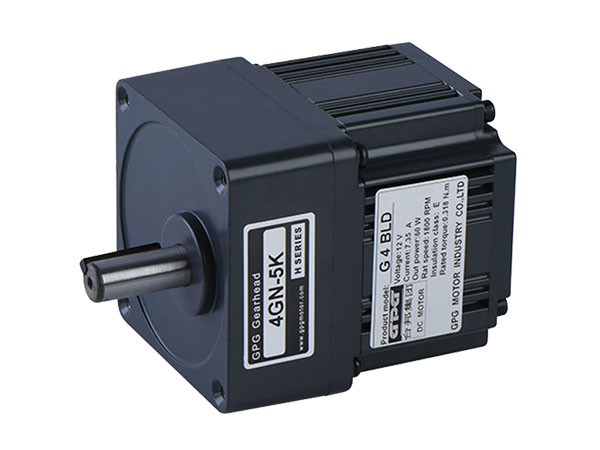
In order to ensure long term stable and reliable operation of your machines,you should also consider the strength of the output shaft.
Then how to consider the strength of the output shaft of your gearmotor?
The allowable radial load and axial load of the gear reduction motor should be considered.
What's the radial direction of the gear motor?
Radial refers to the direction along the cross section of the gear motor shaft,and passing through the shaft center,which is similar to the definition of radius or diameter.Therefore,it is called radial.
And what is the axial direction of the shaft?
The axial direction of the gear reducer motor is the shaft section,which is perpendicular to the direction of the section.Because it is along the rotation center of the shaft,it is called the axial direction.
We have been back from our holiday.
We will be close from 14th,Jan.to
Airport operators meet more baggage handling challenging these years.We Taibang GPG motor group offers various low noise and reliable TMX113 drum motor to satisfy the airports needs worldwide.If you have need for your airport projects,
A single-phase motor is one of the most common types of electric motors used in homes, small workshops, commercial equipment, and light industrial machinery.
When choosing a dc gear motor or an ac gear motor for industrial equipment, automation systems, conveyors, packaging machines, or compact mechanical devices, one question appears again and again: what is the actual difference between them? At first glance, both products seem to do the same job.
When selecting or wiring a dc gear motor, one of the most practical questions is whether polarity matters. The answer is yes. In most cases, a DC gear motor is polarity-sensitive, which means the positive and negative connections influence how the motor operates, especially its rotation direction.
A DC gear motor is one of the most widely used power transmission solutions in modern equipment. From automated dispensers and medical devices to conveyors, vending machines, smart locks, and compact industrial systems,
AC (Alternating Current) gear motors are essential components in a wide range of industrial applications. These motors combine the benefits of an AC motor with the power of a gear system to produce reliable torque and speed control for various types of machinery and equipment.
AC gear motors are essential components in many industrial applications, providing reliable power and motion control for everything from conveyor systems to automated machinery.
AC gear motors are essential components in many industrial and mechanical applications, converting electrical energy into mechanical power with high efficiency. These motors are found in everything from conveyor belts and pumps to robotics and automated machinery.
Choosing the right AC gear motor for your project or application can be a daunting task, given the wide variety of options available.
AC gear motors are essential components in various industrial and mechanical applications. These motors are commonly used to convert electrical energy into mechanical energy while providing the necessary torque and speed control for machinery like conveyor belts, robotic arms, and pumps.
Precision equipment requires reliable, consistent, and accurate motion control. Whether in laboratory instruments, automated manufacturing systems, or high-end medical devices, every movement must happen at the right speed, with the right force, and without unwanted variation.
Micro AC gear motors might be small in size, but they play a crucial role in the smooth operation of many industrial automation systems. By combining the efficiency of an AC motor with the torque-boosting ability of a gearbox, they deliver precise, controlled movement in a compact form.
Gear motors are among the most versatile mechanical components in modern engineering. They are used to convert electrical energy into mechanical motion, while simultaneously adjusting torque and speed through an integrated gearbox.
Micro AC gear motors are compact and powerful devices that combine the functionality of an AC electric motor with a gearbox to deliver controlled speed and high torque in a small package.
Hypoid gear motors are an essential component in the world of mechanical power transmission, offering a range of advantages in various industrial and commercial applications.
In the world of mechanical automation and motion control, few components are as indispensable and adaptable as the small AC gear motor.
A Micro AC gear motor is a compact electric motor that operates on alternating current (AC) and integrates a gear reduction system. This type of motor is specifically designed for applications that require precise torque control and low-speed performance.
Introduction: Understanding the Core of an AC Gear MotorIn the world of industrial automation, robotics, and motion control, the AC gear motor stands as a cornerstone component.