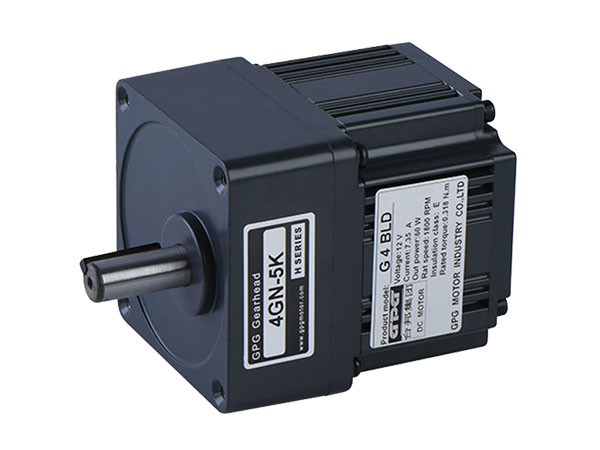
Views: 0 Author: Site Editor Publish Time: 2026-01-15 Origin: Site


Gear motors are among the most versatile mechanical components in modern engineering. They are used to convert electrical energy into mechanical motion, while simultaneously adjusting torque and speed through an integrated gearbox. Among the many types of gear motors available, micro AC gear motors and micro DC gear motors are two of the most commonly used. While they may look similar on the outside, they operate on different electrical principles, have unique performance traits, and are better suited for different applications. Understanding these differences is essential for engineers, manufacturers, and designers when selecting the right motor for a project.
A micro AC gear motor operates using alternating current (AC) as its power source. In these motors, the stator windings receive AC power, producing a rotating magnetic field that drives the rotor. The motor’s shaft is connected to a gear assembly, which reduces rotational speed and increases torque. These motors are known for their ability to provide stable performance over long periods, making them ideal for continuous-duty applications. The design is often robust and capable of operating in environments where frequent maintenance is not feasible.
Micro AC gear motors typically maintain a fixed speed determined by the supply frequency and the gearbox ratio. This predictable performance makes them especially useful in applications where speed consistency is critical, such as conveyor belts, industrial mixers, and automated gates. Their compact form allows them to fit into tight spaces without sacrificing torque output, and they often have a long operational lifespan when used within their design parameters.
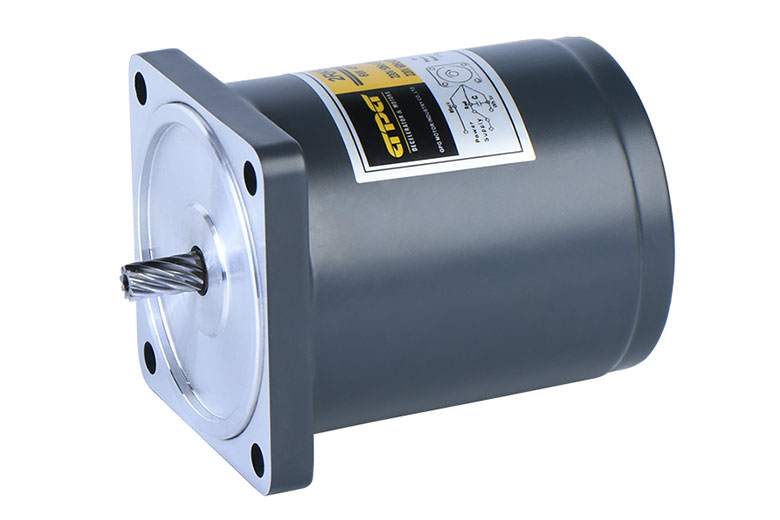
In contrast, a micro DC gear motor is powered by direct current (DC). Instead of relying on alternating magnetic fields, these motors use a constant voltage supply to produce torque. The speed of a DC motor can be easily controlled by adjusting the input voltage, making them highly flexible for applications requiring variable speed or quick response to changing conditions. Like AC gear motors, they integrate a gearbox to optimize torque and speed for the intended load.
DC gear motors are often chosen for battery-powered devices, portable equipment, robotics, and other applications where independent control and compactness are essential. They can operate at a wide range of speeds and offer high starting torque, which is beneficial in scenarios where immediate, forceful movement is needed. However, they may require more frequent maintenance, especially if they use brushes that wear down over time.
The most obvious distinction between micro AC and DC gear motors lies in their power sources. AC motors are designed to run on mains electricity, which alternates in polarity and typically operates at standardized frequencies such as 50 Hz or 60 Hz. This results in a predictable speed profile that is tied to the electrical grid frequency. AC gear motors are generally easier to integrate into fixed-location machinery connected to wall power.
DC motors, on the other hand, run on a steady voltage supply, such as from batteries or a regulated DC power source. This makes them ideal for portable systems or applications where power comes from renewable energy sources like solar panels. The ability to adjust the voltage directly translates to adjustable motor speed, offering flexibility without needing additional complex electronics.
When it comes to speed control, DC gear motors have a clear advantage in versatility. By varying the supply voltage, designers can achieve precise speed adjustments, making them popular for applications like robotics, where movement speed may need to change rapidly. Pulse-width modulation (PWM) can further enhance speed control without significant power loss.
AC gear motors, however, operate at speeds that are essentially fixed by the frequency of the power supply and the motor’s pole count. While variable frequency drives (VFDs) can be used to control AC motor speed, these devices add complexity and cost. For applications where constant speed is critical, AC gear motors are the natural choice, as their speed stability under load is one of their strongest advantages.
Both AC and DC gear motors are capable of producing high torque thanks to their gear reduction systems, but their torque characteristics differ. DC gear motors often deliver high starting torque, which is valuable when overcoming initial resistance or accelerating heavy loads from rest. This makes them suitable for intermittent operation with frequent starts and stops.
AC gear motors generally provide steady torque during continuous operation. They are designed to run efficiently for long periods without significant overheating, which is why they are preferred in conveyor systems, continuous manufacturing processes, and other industrial equipment where uninterrupted operation is needed.
From a design perspective, both motor types can be made in compact sizes, but AC gear motors often have a simpler integration process for stationary industrial equipment. They connect directly to the AC mains supply without needing additional power conversion equipment, making them more convenient for factory settings.
DC gear motors, while also compact, require either batteries or a DC power supply, which can add to system complexity in fixed installations. However, their ease of control and compatibility with portable power sources make them ideal for mobile or self-contained devices.
Energy efficiency depends heavily on the application. DC gear motors can be very efficient in low-power, variable-speed operations, especially when paired with efficient control electronics. They waste less energy in situations where speed adjustments are frequent, as the motor draws only as much power as needed for the task.
AC gear motors can be highly efficient when running continuously at a constant load and speed. They tend to have lower maintenance costs over time and are less prone to wear from frequent operation, especially if they use induction motor technology without brushes or commutators.
Maintenance needs vary between the two types. AC gear motors are generally low-maintenance, especially brushless designs, which have fewer parts subject to wear. They are built to handle continuous operation in demanding industrial settings with minimal servicing.
DC gear motors, particularly brushed types, require periodic maintenance to replace worn brushes. Brushless DC motors offer longer life but at a higher initial cost. Regardless of type, proper lubrication of the gearbox and avoiding overloads are crucial for extending service life.
The initial cost of a micro AC gear motor can be lower than that of a high-performance DC gear motor, especially when factoring in the lack of need for specialized control electronics in constant-speed applications. However, when variable speed is a requirement, DC gear motors can reduce system costs by eliminating the need for complex AC motor controllers.
Over the long term, AC gear motors may offer lower total cost of ownership in fixed, continuous-duty applications because of their durability and minimal maintenance. DC gear motors, while potentially more expensive to maintain, can offer significant operational advantages in terms of flexibility and performance in dynamic applications.
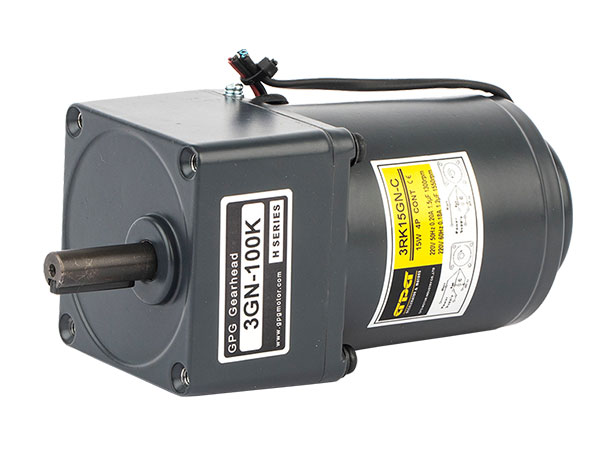
The decision between a micro AC gear motor and a DC gear motor should be guided by the specific needs of the application. If the project requires continuous operation, stable speed, and minimal maintenance, a micro AC gear motor is likely the better choice. If variable speed, portable operation, or high starting torque is needed, a micro DC gear motor may be more appropriate.
Engineers should also consider factors such as available power sources, expected duty cycles, environmental conditions, and integration requirements. While either type can deliver reliable performance, matching the motor’s inherent strengths to the application’s demands ensures optimal efficiency and longevity.
Although micro AC gear motors and DC gear motors share a common function—converting electrical energy into controlled mechanical motion—their differences in power supply, control, torque characteristics, maintenance needs, and integration requirements make each better suited to certain tasks. AC gear motors excel in stability, durability, and continuous-duty performance, while DC gear motors offer unmatched flexibility in speed control and high starting torque. By understanding these key differences, engineers can make informed choices that lead to better performance, efficiency, and reliability in their designs.
For high-quality micro AC gear motors designed for industrial and precision applications, Taibang Motor Industry Group Co., Ltd. offers a comprehensive range of solutions that combine advanced engineering with dependable performance.