Views: 0 Author: Site Editor Publish Time: 2022-10-06 Origin: Site
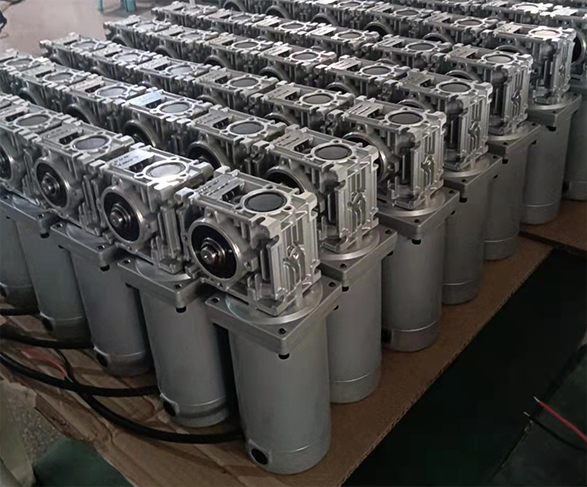
In the transmission mode of gear reducer,the worm gear transmission has the self-locking function that other gear transmissions do not have.
The self-locking function of worm gear drive is very useful in mechanical application.It is widely used in conveying equipments,elevators,mixing equipments,food processing equipments,metallurgy and mining,etc.
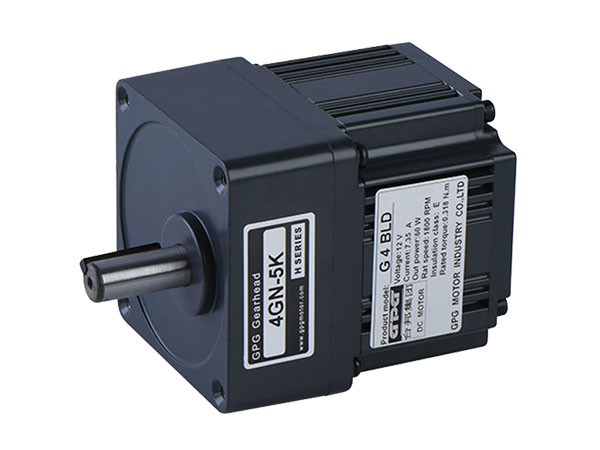
We do have different types worm gear reduction motor to meet various application requirement.There are AC small worm gear motor,AC micro worm gear reduction motor,PMDC brushed worm gear reducer motor,DC brushless worm gearbox motor.
Of course we recommend to equip with magnetic brake motor where high self-locking strength required for.


We have been back from our holiday.
We will be close from 14th,Jan.to
Airport operators meet more baggage handling challenging these years.We Taibang GPG motor group offers various low noise and reliable TMX113 drum motor to satisfy the airports needs worldwide.If you have need for your airport projects,
Master DC gear motor selection with this guide. Learn to balance torque, speed, and gear ratios for efficient, high-performance mechanical systems.
Learn to identify AC gear motor failure signs, diagnose root causes, and make data-driven repair vs. replace decisions to prevent costly downtime.
Master gear motor selection: Learn to calculate torque, evaluate efficiency, and avoid mechanical failure with our definitive engineering guide. (144 characters)
Compare AC vs. DC gear motors. Discover why DC technology offers superior torque, precision control, and efficiency for modern industrial automation.
Maximize ROI with single-phase motors. Learn how to reduce infrastructure costs, solve torque challenges, and optimize commercial equipment deployment.
Master single-phase motor selection. Compare Capacitor-Start, PSC, and gear motors to optimize torque, efficiency, and reliability for any load.
Solve high-torque challenges on standard power grids with single-phase gear motors. Learn selection, torque evaluation, and risk mitigation.
Discover the benefits of single-phase gear motors: high torque, lower costs, and easy installation for light-industrial apps under 3 HP.
Master single-phase gear motor troubleshooting. Identify electrical and mechanical faults, evaluate repair vs. replace, and optimize system uptime.
Master DC gear motor selection. Learn to balance torque, duty cycles, and gearbox types for robust, long-lasting industrial performance.
Maximize torque and efficiency in sub-3 HP applications with single-phase gear motors. Learn to optimize performance on standard power grids.
A single-phase motor is one of the most common types of electric motors used in homes, small workshops, commercial equipment, and light industrial machinery.
Single-phase motors are among the most common electric motors used in light industrial equipment, commercial machines, and everyday mechanical systems.
When choosing a dc gear motor or an ac gear motor for industrial equipment, automation systems, conveyors, packaging machines, or compact mechanical devices, one question appears again and again: what is the actual difference between them? At first glance, both products seem to do the same job.
When selecting or wiring a dc gear motor, one of the most practical questions is whether polarity matters. The answer is yes. In most cases, a DC gear motor is polarity-sensitive, which means the positive and negative connections influence how the motor operates, especially its rotation direction.
A DC gear motor is one of the most widely used power transmission solutions in modern equipment. From automated dispensers and medical devices to conveyors, vending machines, smart locks, and compact industrial systems,
AC (Alternating Current) gear motors are essential components in a wide range of industrial applications. These motors combine the benefits of an AC motor with the power of a gear system to produce reliable torque and speed control for various types of machinery and equipment.