Views: 0 Author: Site Editor Publish Time: 2026-06-03 Origin: Site


Single-phase power remains the standard electrical supply across residential, agricultural, and light-commercial environments. Standard alternating current, however, faces a fundamental physical limitation. It cannot generate a rotating magnetic field on its own. Selecting the wrong motor type for your mechanical load directly leads to stalled equipment. It causes blown capacitors, tripped breakers, and unnecessary upfront expenses.
You cannot afford to guess when specifying machinery components. Matching the correct starting mechanism to your application is critical for reliable operation. This guide provides an evidence-based breakdown of standard single-phase motor configurations. We explore how different starting designs impact torque delivery and operating efficiency. By the end, you will evaluate different architectures, compare their performance profiles, and make data-driven sourcing decisions.
Single-phase motors are categorized primarily by how they solve the "zero starting torque" problem (e.g., capacitors, split phases, shaded poles).
High-inertia loads (like compressors) require Capacitor-Start designs, while continuous-duty air handlers favor Permanent Split Capacitor (PSC) configurations.
For applications requiring precise low-speed, high-torque output on standard AC power, integrating a single-phase gear motor is vastly more reliable than electrically forcing a standard motor outside its optimal speed range.
Commercial viability is generally limited to applications under 3kW (approx. 4 HP); beyond this, three-phase systems become necessary for efficiency.
Understanding single-phase limitations requires a brief look at physics. Engineers rely on the "double-field revolving theory" to explain this phenomenon. A single stator coil produces a pulsating magnetic field. It pushes and pulls in a straight line. It does not rotate. You can visualize this as two magnetic fields of equal strength rotating in opposite directions. These opposing forces cancel each other out perfectly. Without an auxiliary starting mechanism, the net starting torque remains at exactly zero.
Manufacturers must engineer a solution to create a rotating magnetic field. They introduce a second physical winding into the stator. We call this the starter winding. However, adding a winding alone does not solve the problem. The electrical current must enter this second winding at a different time than the main winding. Engineers alter the electrical phase angle to create this delay. They aim for up to a 90-degree phase shift. They achieve this shift by adding specific resistance or capacitance to the circuit.
Your sourcing decisions heavily depend on these starting mechanisms. The method used to create this phase shift dictates physical dimensions. It impacts maintenance requirements directly. Some designs require centrifugal switches. These mechanical parts wear out over time. Other designs use permanent capacitors. The specific starting architecture ultimately determines your acquisition cost and operational reliability.

Comparing motor architectures helps you avoid costly misapplications. We compiled a matrix to evaluate the five standard single-phase variants. Use this baseline data to guide your initial selection.
Motor Type | Starting Torque | Efficiency | Relative Cost | Best For |
|---|---|---|---|---|
Split-Phase | Low (1.5x full load) | Moderate | Low | Small pumps, drill presses |
Capacitor-Start | High (up to 4.5x) | Moderate | Medium | Compressors, conveyors |
Permanent Split Capacitor (PSC) | Low | High | Medium | HVAC blowers, fans |
Capacitor-Start/Run | High | Highest | High | Heavy ag equipment |
Shaded-Pole | Negligible | Very Low | Very Low | Tiny exhaust fans |
Split-phase motors represent the most basic induction design. The mechanism uses a high-resistance starting winding alongside the main winding. This difference in resistance creates a small phase shift. A mechanical centrifugal switch sits on the rotor shaft. It physically disconnects the starting winding when the rotor reaches 75% of its nominal speed.
These motors offer a low initial cost. Their simple design makes them easy to manufacture. However, they suffer from notable drawbacks. They deliver low starting torque, typically around 1.5 times the full-load running torque. They also draw massive starting currents. This initial surge can hit up to eight times the full-load current.
You should specify split-phase motors strictly for low-inertia loads. They work best in applications ranging from 60W to 250W. Common uses include small centrifugal pumps, commercial blowers, and light-duty drill presses.
Capacitor-start configurations solve the torque deficit found in split-phase models. The mechanism places an electrolytic capacitor in series with the start winding. This capacitor forces the current to lead the voltage. It achieves an ideal 90-degree phase shift between the two windings. This massive shift multiplies the starting torque significantly.
The primary advantage is exceptional starting muscle. These units can generate up to 4.5 times their full-load torque. They easily overcome heavy static friction. However, this design introduces vulnerable wear components. The centrifugal switch and the electrolytic capacitor both degrade. You must schedule periodic replacements for these parts.
These motors excel in demanding environments. They are ideal applications for air compressors. You will also find them driving large material conveyors and heavy workshop equipment.
Permanent Split Capacitor motors prioritize continuous reliability over raw starting power. The mechanism uses a single, continuous-duty run capacitor. It stays wired in series with the auxiliary winding at all times. This design completely eliminates the mechanical centrifugal switch.
PSC motors offer exceptional continuous operation. They run quietly and highly efficiently. They boast the longest lifespan among all standard single-phase types. The major tradeoff is lower starting torque. They cannot push heavy dead weights from a standstill.
You should deploy PSC motors for high-uptime, low-friction loads. They dominate the HVAC industry. They are the standard choice for blower motors, exhaust fans, and pool or SPA pumps.
Two-value capacitor motors combine the best traits of both previous designs. The mechanism uses two separate capacitors wired in parallel. An electrolytic capacitor provides massive starting torque. A centrifugal switch drops this start capacitor out at 75% speed. An oil-filled run capacitor remains in the circuit. It ensures smooth, highly efficient continuous operation.
This configuration is the most powerful standard single-phase design available. It provides maximum starting torque and maximum running efficiency. The downside involves upfront acquisition cost. The complex internal wiring and dual capacitors make them expensive to buy and repair.
Specify these units for uncompromising industrial applications. They are perfect for heavy-duty agricultural equipment. They also perform beautifully in high-load, deep-well pumps.
Shaded-pole motors take a radically different mechanical approach. The mechanism uses a thick copper ring called a shading coil. Manufacturers install this ring on a portion of each magnetic pole. The ring delays the magnetic field buildup in that specific section. This slight delay induces a weak rotating field.
These units are extremely rugged. They cost very little to produce. They require no capacitors or mechanical switches. Their simplicity makes them nearly indestructible. The downside is terrible electrical efficiency. They also produce practically negligible starting torque.
You must restrict shaded-pole motors to ultra-light duties. They fit perfectly in tiny bathroom exhaust fans. You also see them in hair dryers and low-wattage commercial refrigeration displays.
Standard induction architectures operate at fixed, relatively high speeds. Common synchronous speeds include 1800 or 3600 RPM. Many industrial applications need slow, deliberate movement instead. Attempting to reduce a standard motor's speed via voltage drops creates severe problems. The motor will overheat rapidly. It will also suffer massive torque loss. Direct drive systems fail under these conditions.
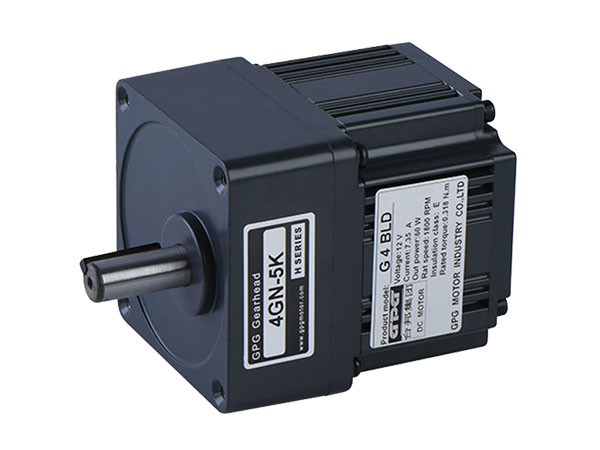
The engineering solution introduces a specialized combined unit. You should specify a single-phase gear motor. This machine integrates an AC motor directly with a mechanical speed reducer. The attached gearbox solves the speed and torque dilemma simultaneously.
Evaluating geared solutions requires understanding mechanical advantage. A gearbox converts high-speed, low-torque rotation into low-speed, high-torque output. This multiplication is absolutely essential for heavy conveyors. You need this power for heavy mixers or lifting mechanisms. It allows you to run heavy machinery smoothly on standard household power.
You must also evaluate specific gear types for your application:
Worm Gears: Provide high reduction ratios in tight spaces. They offer self-locking capabilities to prevent back-driving. However, they exhibit lower mechanical efficiency due to sliding friction.
Helical Gears: Provide extremely high efficiency. They run cooler and handle continuous duty cycles beautifully. They cost slightly more but save energy over time.
Consider the practical ROI factor for your facility. Implementing variable frequency drives (VFDs) with phase converters is expensive. VFDs add complex programming and electronic fragility. A single-phase gear motor provides a cheaper, far more robust alternative. It perfectly handles simple, fixed low-speed requirements without fragile electronics.
Standard induction motors cover most commercial needs. However, specialized applications sometimes require alternative architectures. You should understand these niche variants for edge-case problem-solving.
Universal (Series) Motors
These highly adaptable motors can run on either AC or DC power. They offer massive starting torque and extreme operational speeds. Some units easily reach up to 20,000 RPM. They are best suited for handheld power tools and industrial vacuum cleaners. Their main drawbacks include loud operational noise and high maintenance. The carbon brushes wear down and require regular replacement.
Switched Reluctance Motors
This design abandons traditional magnetic induction entirely. It relies on the "path of least magnetic reluctance" to create motion. The rotor aligns itself with alternating magnetic fields generated by the stator. This requires complex electronic sequencing. However, it offers highly precise control. Engineers use these in high-end appliances and modern specialized automation.
Nola Power Factor Correction (PFC)
This technology serves as a retro-fit solution rather than a unique motor type. NASA engineer Frank Nola developed it to fix light-load inefficiencies. Single-phase motors waste energy when running under light loads. Nola PFC senses this drop. It artificially lowers the voltage during idling periods. This recovers electrical efficiency and dramatically reduces excess heat. You should consider this for machines like idling punch presses.
Procuring the wrong equipment causes cascading mechanical failures. You can avoid these expensive mistakes by following a structured sourcing framework. Apply these three systematic steps before approving any purchase order.
Audit the Power & Load Limit
You must verify your facility's electrical capabilities first. Confirm the application absolutely requires strictly single-phase power. Do not push single-phase technology beyond its practical limits. The commercial viability ceiling sits firmly at 3kW (approximately 4 HP). If your load demands more power, you must upgrade to a three-phase system. Exceeding this limit causes extreme inefficiencies and dangerous current draws.
Assess Starting vs. Running Demands
Match the motor's internal architecture to your mechanical load's physical behavior.
Does the load demand high starting torque to overcome static friction? Specify a Capacitor-Start motor.
Does the machine require high continuous uptime with low noise? Specify a PSC motor.
Does the application need massive torque at very low RPMs? Specify a single-phase gear motor.
Factor in Maintenance Realities
You must acknowledge environmental and operational wear. Frequent cycling on Capacitor-Start motors ruins electrolytic capacitors. You should budget for capacitor replacements every three to five years. Furthermore, examine the operating environment. If the motor faces dusty, wet, or corrosive conditions, specify a TEFC enclosure. Totally Enclosed Fan Cooled enclosures protect sensitive starting switches from airborne debris. Open Drip Proof (ODP) enclosures will fail rapidly in harsh environments.
Over-specifying a motor wastes your budget unnecessarily. Paying for dual capacitors when a simple PSC design suffices throws money away. Conversely, under-specifying leads to catastrophic failure. Using a split-phase motor for a heavy compressor will burn the windings instantly.
You must map your specific load requirements to the appropriate starting mechanism. High friction requires start capacitors. Continuous quiet running requires run capacitors. Heavy, slow turning requires mechanical gear reduction.
We highly recommend consulting with mechanical power transmission specialists before making large purchases. You should review duty cycles, load inertia calculations, and environmental enclosure requirements. Precision engineering prevents expensive downtime.
A: This symptom almost always points to a failed starting mechanism. The main winding receives power, creating a pulsating magnetic field. It hums but cannot rotate. You likely have a blown start capacitor or a stuck centrifugal switch. Disconnect the power immediately to prevent the motor windings from overheating and melting.
A: Yes, certain designs handle continuous operation perfectly. Permanent Split Capacitor (PSC) and Capacitor-Run types are built for this exact purpose. They do not rely on mechanical switches that degrade. Always verify the motor nameplate states a 100% duty cycle rating before leaving it running continuously.
A: It depends on your scale. Single-phase motors remain the best choice for standalone equipment under 3kW. They are simpler and cheaper to install. Phase converters make financial sense for facilities operating multiple high-power machines. Three-phase motors offer smoother power delivery for large industrial loads.
A: You should set realistic maintenance expectations. Electrolytic start capacitors typically last between three to five years. Their lifespan depends heavily on your cycle rates and ambient heat. High temperatures and frequent stop-start cycles dry out the internal chemicals rapidly. Always keep spare capacitors on hand for mission-critical equipment.