Views: 0 Author: Site Editor Publish Time: 2026-06-02 Origin: Site


Equipment designers and facility managers often face a distinct procurement challenge. You must balance strict torque and speed requirements when only standard single-phase power is available. Resolving this engineering hurdle demands careful planning and correct component selection.
Three-phase power largely dominates heavy industrial plants. However, single-phase motors remain essential for light-industrial, commercial, and agricultural operations. Pulling new three-phase lines to remote sites or residential zones is often impossible or financially prohibitive. Facilities must therefore maximize the capabilities of standard utility grids.
This article provides a clear, evidence-based framework for specifying these electric drives. We will specifically explore how integrating a single-phase gear motor solves complex high-torque, low-speed challenges. You will learn actionable strategies for evaluating torque limits, mitigating implementation risks, and selecting the optimal motor enclosure for your specific environment.
Single-phase motors are purpose-built for environments lacking access to a three-phase power grid, prioritizing installation flexibility over maximum energy efficiency.
Integrating a single-phase gear motor is the standard solution for converting high-speed, low-torque operation into the low-speed, high-torque output required by conveyors, hoists, and mixers.
Selecting the correct motor requires evaluating starting torque requirements, duty cycles, and capacitor maintenance.
Implementation risks primarily involve thermal management, high inrush currents, and the limitations of speed control compared to three-phase alternatives.

Selecting the correct electrical motor starts by analyzing the installation environment. Before assessing mechanical load requirements, you must evaluate the facility's existing electrical infrastructure.
The primary business driver for choosing this technology usually relates to location and infrastructure limits. Facility managers frequently install equipment in commercial buildings, residential zones, or remote agricultural sites. In these locations, upgrading to a three-phase power supply requires trenching new utility lines, upgrading transformers, and installing new electrical panels. These upgrades are cost-prohibitive. Standard 115V or 230V circuits already exist in these spaces, making standard AC motors the most practical and immediate choice for new equipment integration.
Because they run on standard grid power, these motors power a massive variety of commercial and light-industrial machinery. We can categorize the most common applications into three primary sectors:
HVAC and Pumping: This category includes ventilation fans, exhaust blowers, and centrifugal fluid pumps. These applications generally require lower starting torque. Once the fan or pump impeller begins spinning, the load increases gradually.
Agricultural Machinery: Farm environments rely heavily on standard utility power. Common applications include grain feed augers, silo unloaders, milking machines, and automated irrigation systems. These machines often operate outdoors and require robust starting power to move settled materials.
Light Manufacturing and Packaging: In commercial warehouses, you will find these motors driving small-scale conveyor belts, labeling machines, automated security gates, and packaging wrappers. These tasks demand precision and reliable daily operation.
How do you know if you made the right engineering choice? The decision is successful when your equipment operates reliably on standard 115V/230V infrastructure. The motor must start the load consistently without triggering grid overloads, tripping circuit breakers, or requiring expensive facility electrical upgrades. Reliable operation under peak load conditions validates the specification process.
Direct-drive motors work well for high-speed fans, but they fail when applied to heavy industrial tasks. Moving massive, stationary objects requires a mechanical advantage.
Standard electric motors naturally run at high speeds. A typical four-pole AC motor might spin at 1,750 revolutions per minute (RPM). At this high speed, the rotational force (torque) remains relatively low. This low torque output proves insufficient for moving heavy, static loads. If you connect a standard motor directly to a fully loaded conveyor belt, the motor will likely stall, overheat, and fail. The physics of the application demand high torque at low speeds.
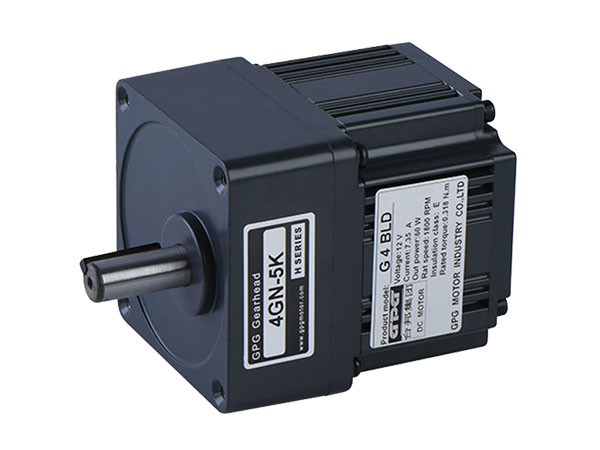
Engineers solve this dilemma by integrating a reduction gearbox. A single-phase gear motor pairs the standard electric motor with a mechanical gearbox. The gearbox contains a series of gears—typically worm, helical, or planetary configurations. The gearbox acts as a torque multiplier. If the gearbox has a 10:1 reduction ratio, it reduces the output speed by a factor of 10 while multiplying the output torque by roughly the same factor. This mechanical transformation allows a relatively small motor to generate massive twisting force.
When you need to perform heavy work on a standard power grid, gear reduction becomes mandatory. Engineers rely on these integrated units for highly demanding tasks:
Material Handling: Providing the necessary starting torque to overcome static friction (stiction). This allows facilities to move fully loaded, static conveyor belts safely from a dead stop.
Processing Equipment: Delivering consistent, low-speed power required for commercial dough mixers, plastic extruders, and agricultural feed crushers. These machines require relentless, unyielding force rather than high speed.
Lifting Mechanisms: Powering hoists, winches, and service elevators where sudden drops in speed could cause safety hazards or mechanical failures.
Equipment designers must compare the upfront cost of an integrated gear motor versus the labor requirements of engineering a custom belt-and-pulley reduction system. While buying a motor and building a custom pulley system might seem cheaper initially, it introduces significant long-term drawbacks. Belt systems require constant tensioning, frequent alignment, and more physical space. An integrated gearhead arrives as a single, sealed unit. It saves engineering time, reduces the footprint inside the machine chassis, and virtually eliminates mechanical maintenance.
Making an informed procurement decision requires benchmarking standard AC motors against their heavy-industrial counterparts. You must weigh physical limitations against facility realities.
If a facility already has three-phase power available at the installation site, engineers generally prefer utilizing it. Three-phase equipment is inherently smoother, smaller, and more efficient. However, single-phase power is chosen when hard facility constraints dictate it. You cannot simply plug a three-phase machine into a standard wall outlet. The existing electrical grid remains the ultimate deciding factor.
You must acknowledge the electrical trade-offs. Standard single-phase motors typically draw more current to perform the same amount of work as a three-phase alternative. They lack the overlapping power waves found in industrial grids, meaning they run less electrically efficient. This lower efficiency translates into higher continuous operating costs. Over a ten-year lifespan, the electricity consumed will far exceed the initial purchase price of the equipment.
Standard motors boast exceptionally low initial setup costs. You do not need to purchase expensive phase converters or install specialized electrical panels. A licensed electrician can wire the equipment quickly using standard breakers. However, routine maintenance expenses can be marginally higher. These units contain mechanical starting switches and external capacitors. These components degrade over time and require eventual replacement, adding a slight maintenance burden.
Variable speed control is significantly more complex on standard AC motors. While pairing three-phase equipment with Variable Frequency Drives (VFDs) is an industry standard, applying VFDs to standard 115V/230V motors is highly problematic. Starting capacitors and mechanical switches disrupt the VFD's synthetic waveforms. If an application strictly requires variable speed control, engineers typically employ a specialized phase-converting VFD powering a three-phase motor instead.
Evaluation Criteria | Single-Phase Motors | Three-Phase Motors |
|---|---|---|
Grid Availability | Universal (Residential, Commercial, Rural) | Limited to Industrial and Large Commercial |
Energy Efficiency | Moderate (Draws higher current) | High (Smoother continuous power delivery) |
Initial Setup Complexity | Low (Plugs into standard infrastructure) | High (Requires specialized panels/wiring) |
VFD Compatibility | Poor (Capacitors interfere with drives) | Excellent (Industry standard for variable speed) |
Once you verify the facility's power supply, you must match the motor's internal design to the exact mechanical load. Guessing load requirements leads directly to premature equipment failure.
Not all motors handle startup stresses equally. You must categorize your load based on how hard it is to start from a complete stop. Industry standards define two main electrical configurations:
Split-Phase Designs: These are suitable for low starting torque applications. They rely on a simple auxiliary winding to get the rotor spinning. Use them for small exhaust fans, centrifugal blowers, and light-duty pumps where the load increases gradually.
Capacitor-Start / Capacitor-Run (CSCR): This configuration is mandatory for hard-to-start loads. The unit uses electrical capacitors to inject a massive surge of power into the start windings. You must specify CSCR designs for air compressors, heavy conveyors, and industrial crushers to prevent dangerous stalling and subsequent overheating.
You must evaluate whether the machine runs constantly (continuous duty) or starts and stops frequently (intermittent duty). Because standard AC alternating current pulses, these motors generate more internal heat than industrial alternatives. Heat destroys wire insulation. For high-cycle applications where the machine starts dozens of times per hour, engineers often oversize the equipment slightly. Specifying a higher horsepower rating prevents thermal degradation and extends the functional lifespan of the internal windings.
The operating environment dictates the required physical housing. NEMA (National Electrical Manufacturers Association) standards classify enclosures to protect internal components from external contamination.
ODP (Open Drip Proof): These enclosures feature open vents to allow ambient air to cool the internal windings. They are cost-effective but offer minimal protection against debris. Specify ODP only for clean, dry indoor environments like climate-controlled warehouses or cleanrooms.
TEFC (Totally Enclosed Fan Cooled): This design completely seals the internal components from outside air. An external fan blows cooling air over the ribbed outer casing. TEFC enclosures are strictly required for dusty, dirty, or damp industrial and agricultural environments to prevent short circuits.
Even properly specified equipment faces operational hazards. Understanding common failure modes allows you to implement preventative maintenance strategies before unexpected downtime occurs.
Electrical capacitors represent the most common point of failure. Starting capacitors degrade naturally over time due to heat and thousands of electrical cycles. When a capacitor fails, the motor loses its starting torque, causing it to hum loudly without turning. Mitigation: Establish proactive maintenance schedules. Measure capacitor microfarads annually during routine service. Always keep exact replacement capacitors in local inventory to minimize costly equipment downtime.
Standard AC motors draw significant electrical current upon initial startup—often three to six times their normal running current. This sudden spike creates a temporary voltage drop across the local grid. Mitigation: You must ensure facility wiring and breakers are appropriately sized to handle this inrush surge. Undersized wiring will cause breakers to trip frequently or starve adjacent electronic equipment of necessary voltage, leading to erratic facility operations.
In capacitor-start designs, a mechanical centrifugal switch disconnects the start capacitor once the rotor reaches roughly 75% of its maximum speed. Because it is a moving physical part, it can fail from mechanical fatigue or excessive dirt accumulation. If the switch sticks closed, the start winding will quickly overheat and melt. Mitigation: Specify modern electronic motor starters where possible. If mechanical switches remain necessary, specify sealed TEFC enclosures to prevent agricultural dust or industrial debris from jamming the switch mechanism.
To ensure a successful installation, follow a structured engineering workflow:
Audit Voltage Reliability: Measure the actual voltage at the installation site under load. A nominal 115V circuit dropping to 105V during startup will cause stalling.
Calculate Exact Torque Requirements: Do not guess. Calculate the exact breakaway torque needed to move your heaviest static load.
Consult a Distributor: Work directly with a specialized power transmission distributor. They can calculate the precise gearbox reduction ratio required to match your application's speed and torque profiles.
Verify Physical Dimensions: Ensure the final integrated unit physically fits inside your machine's designated chassis space before ordering.
Standard single-phase motors remain highly vital tools in modern engineering. Particularly when configured as a single-phase gear motor, they provide indispensable solutions for high-torque applications constrained by standard utility grids. They bridge the gap between heavy industrial performance and commercial infrastructure limits.
When procuring new equipment, we strongly advise buyers to look beyond the base sticker price. Prioritize correct horsepower sizing, appropriate capacitor selection, and rugged TEFC enclosures. Properly matching the mechanical gearbox to your starting load ensures long-term operational reliability and prevents sudden thermal failures.
Do not leave your equipment performance to chance. Contact a certified application engineer today. Provide them with your specific load calculations, desired operating speed, and site voltage requirements to receive a customized, mathematically verified sizing recommendation.
A: Yes, but typically only when the motor comes to a complete stop. You achieve this by reversing the electrical polarity of the internal start winding. Instant reversing while the shaft is spinning requires highly specific, custom motor designs. Standard off-the-shelf units will sustain severe electrical and mechanical damage if instantly reversed under load.
A: Standard single-phase motors are generally not recommended for VFD use due to their internal starting capacitors and mechanical centrifugal switches. These components disrupt VFD signals. If variable speed is strictly required on a single-phase supply, using a phase-converting VFD powering a standard three-phase motor is the accepted industry standard solution.
A: They are typically limited to 10 to 15 horsepower (HP) maximum. Beyond this size, the electrical current draw on a standard utility line becomes impractical and heavily inefficient. Generating more than 15 HP requires extremely thick wiring and massive breakers, making a proper three-phase power supply an absolute requirement.
A: This symptom almost always indicates a failure of the internal starting capacitor or the mechanical centrifugal switch. Without a functioning start circuit, the unit cannot generate the initial rotational magnetic field necessary to overcome the static load. Shut off power immediately to prevent the internal windings from melting.