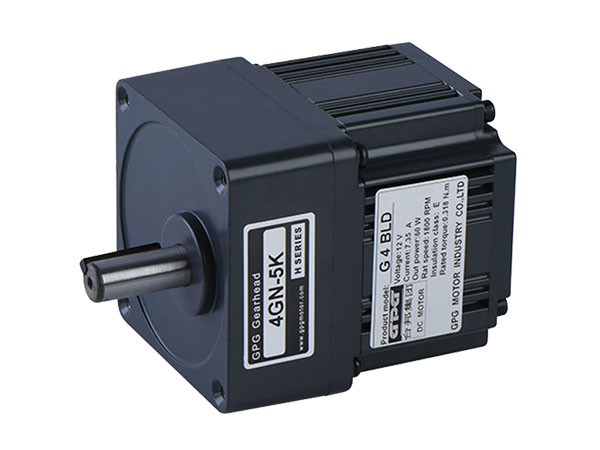
Views: 0 Author: Site Editor Publish Time: 2026-06-15 Origin: Site


Have you ever watched a mechanical prototype fail during a crucial stress test? Selecting a reliable DC gear motor is an exercise in balancing torque requirements, physical space constraints, and budget. Over-speccing inflates your bill of materials needlessly. You end up paying for unused power. Conversely, under-speccing leads to premature component failure. It also triggers rapid thermal overload. You cannot rely on trial and error for industrial designs. We provide an engineering-led framework here to define operational boundaries. You will match motor-to-gearbox combinations accurately. We will reveal how to avoid hidden mechanical traps easily. Review these critical parameters before finalizing a purchase order. You will discover how duty cycles dictate baseline specifications. We will also explore how thermal management dictates lifespan. Apply these actionable insights. You will secure robust, long-lasting performance for your physical hardware.
Operating conditions (duty cycle, voltage, speed) dictate baseline specs; always apply a 20–30% torque safety margin.
The gearbox architecture (Planetary, Spur, Worm, Helical) determines efficiency, noise levels, and footprint.
Systems are bound by the weakest link: you must identify if your output is "motor-limited" or "gear-limited."
Environmental factors—particularly thermal management—exponentially impact motor insulation and lubricant life.
Peripheral engineering (brake placement, drive quadrants) is just as critical as the core motor selection.

Speed and output torque share a strict inverse relationship. You cannot maximize both variables simultaneously. As your output speed increases, available torque drops significantly. You must calculate your required torque accurately. Guessing leads to immediate mechanical failure. Many engineering labs lack advanced telemetry equipment. They cannot measure active loads dynamically. Instead, you can use a practical grassroots estimation formula.
Torque [Nm] = Mass [kg] × 9.81 × Pulley Radius [m]
This basic formula gives you a starting requirement. However, baseline calculations ignore real-world friction. You must add a standard 20–30% safety margin. This margin accounts for progressive system wear. It compensates for unmeasured friction in bearings. It also covers peak starting loads during initial movement. Engineers often call this peak load the stall torque. Your system must survive these sudden physical spikes. Without this safety margin, your motor will stall.
You must define your duty cycle clearly. Is your application continuous or intermittent? Deploying an intermittent-rated motor in a continuous scenario is dangerous. This mistake is the primary cause of motor death. It causes massive overheating and rapid coil burnout. You must match the operational reality to the specification sheet.
Match your system voltage carefully. Typical options include 12V, 24V, or 48V systems. Higher voltages allow thinner wiring. They also reduce overall heat generation. You must evaluate the peak current draw. Ensure your battery or power supply will not bottleneck. A voltage drop under heavy load ruins system stability.
Consider the motor constant, known as Km. This value represents the power-to-torque ratio. It acts as the definitive "figure of merit." Use it to evaluate base motor quality prior to gearing. Higher Km indicates better electrical efficiency. It also means less thermal waste. You should compare Km values across different brands. This comparison reveals the true baseline quality of the bare motor.
Different projects require vastly different mechanical configurations. The gearbox architecture dictates operational performance, noise, and size. You must match the physical design to your specific application limits.
Planetary units feature a central sun gear. Multiple planet gears revolve around this hub. This design distributes physical stress evenly.
Best Application: High-precision, heavy-load, space-constrained setups like industrial robotic arms.
Advantage: They offer immense torque density. They achieve high efficiency, typically between 85% and 95%.
Trade-off: They carry a higher cost. They require highly complex assembly procedures.
Spur designs use straightforward, straight-cut teeth. They remain a staple in budget-friendly consumer electronics.
Best Application: Low-cost, low-speed applications.
Advantage: They are simple to manufacture and extremely affordable.
Trade-off: They have higher backlash. They generate high noise levels at elevated speeds.
Worm drives use a screw-like gear interacting with a standard wheel. They output power at a strict right angle.
Best Application: Mobile robots (AGVs) or lifting mechanisms.
Advantage: Their physical "self-locking" trait prevents dangerous back-driving. They hold heavy loads in place without active power.
Trade-off: High sliding friction limits transmission efficiency to roughly 40–80%. They generate significant operational heat.
Helical designs utilize angled teeth. These teeth engage gradually rather than abruptly.
Best Application: Applications demanding low vibration and continuous, quiet operation.
Advantage: They provide incredibly smooth motion. They handle higher loads than standard spur gears.
Trade-off: The angled design induces axial thrust. You need robust bearings and a larger structural footprint.
Let us compare these architectures directly in a summary chart.
Architecture | Best Use Case | Typical Efficiency | Major Trade-off |
|---|---|---|---|
Planetary | Robotics, high torque | 85–95% | High cost, complex |
Spur | Low-cost devices | 70–80% | Noisy, high backlash |
Worm | AGVs, lifting mechanisms | 40–80% | Low efficiency, heat generation |
Helical | Quiet, smooth operation | 80–90% | Axial thrust, larger footprint |
You must pair your gearbox with an appropriate power source. The base motor type defines lifespan and control complexity. Your choice significantly impacts system maintenance requirements.
These are perfect for budget-conscious projects. They fit simple control systems seamlessly. You only need to apply voltage to generate movement. They work well when continuous operation is unnecessary. However, mechanical wear is a major risk factor. Brush friction guarantees eventual degradation over time. They generate carbon dust and occasional electrical sparking. They are a poor choice for 24/7 industrial automation.
BLDC models meet high-efficiency, long-lifespan demands perfectly. You see them heavily in 48V electric mobility applications. They have no physical brushes to wear out. This design eliminates friction and sparking entirely. They run cooler and last much longer. However, they require electronic speed controllers (ESCs). This requirement increases your overall system complexity. It also raises your initial procurement cost.
Many modern applications demand compact footprints. Consumer robotics, smart locks, and IoT devices have strict physical limits. In these cases, you specifically need a DC small gear motor. You face a direct compromise between torque availability and physical dimensions. These miniature motors typically range from 8mm to 25mm in diameter. You must optimize the gear ratio carefully. A higher ratio extracts more torque from a tiny motor block. However, it sacrifices output speed proportionally. You must balance these factors for compact designs.
Many engineers misunderstand how maximum torque ratings work. You must analyze both components as a unified system. Evaluating them separately invites catastrophic failure.
The basic reality relies on one fundamental physics formula.
System Output Torque = Motor Torque × Gear Ratio × Gearbox Efficiency
You cannot evaluate the motor or gearbox in isolation. They form a single mechanical unit. The efficiency rating dictates how much power actually reaches the final shaft.
Every mechanical system is bound by its weakest link. You must identify your specific limiting factor before deployment.
Motor-Limited: The gearbox is physically robust. It can handle massive loads easily. However, the attached motor lacks the power to drive it. Your output is firmly capped by the electrical motor. The gear teeth will never shear, but the motor will stall constantly.
Gear-Limited: The motor is highly powerful. It generates massive rotational force. Unfortunately, this force exceeds the mechanical shear limits of the gear teeth. The system output is capped by what the gearbox can survive. If you push it, the gear teeth will strip completely.
You must take actionable steps to avoid these failures. Scrutinize the manufacturer's official performance curve carefully. Identify the actual system ceiling for your specific build. Do not just look at isolated component maximums. Always design around the lowest breaking point.
Core specifications only tell half the story. Environmental factors and peripheral hardware dictate actual field reliability. You must engineer the entire surrounding system properly.
Heat is the ultimate enemy of electromechanical devices. Consider the standard engineering rule regarding temperature. Every 10°C rise in the operating environment creates severe consequences. It effectively halves the life of internal lubricants. It also halves the life of motor insulation. You must prioritize active or passive thermal management. Add cooling fins or ventilation paths to your housing. Ensure adequate airflow around the motor body. Thermal runaway will destroy even the best components.
Drive configurations impact energy efficiency and safety. You must choose between single-quadrant and four-quadrant drives. Single-quadrant setups are simpler and cheaper. They only drive and coast. Four-quadrant drives allow regenerative braking for energy recovery. You must decide if energy recovery is worth the converter cost. Sometimes, using simple resistor heat-dissipation makes more economic sense.
Mechanical brake placement follows a strict engineering rule. Holding brakes must always be mounted on the high-speed rotor shaft. You must never mount them on the low-speed gearbox output shaft. The gearbox multiplies torque exponentially. The output shaft handles multiplied torque. This massive force will easily overpower and destroy an output-mounted brake.
Choosing between oil and grease changes your maintenance schedule. Oil offers highly consistent lubrication across moving parts. It flows easily into tight gear meshes. However, it restricts your physical mounting orientation. You must avoid vertical mounting above the motor. Gravity will pull oil through the seals. This causes catastrophic internal electrical shorts.
Grease is highly leak-resistant and easier to contain. You can mount grease-filled units in any orientation. However, grease requires strict adherence to fill-volume limits. Over-lubrication destroys internal seals quickly. It also traps heat against the gears. This trapped heat leads to rapid thermal decay and premature wear.
Procuring the right hardware follows a logical sequence. First, define the mechanical load and your environmental conditions. Next, calculate your required torque. Always include generous safety margins. Then, select the gearbox architecture. Match it to your footprint and efficiency needs. Choose your base motor to balance lifespan against control complexity. Finally, verify the bottleneck limits. This verification prevents sudden shear failures under heavy loads.
Do not rely on guesswork or assumptions. We encourage engineers to utilize available product filters on supplier platforms. You can easily narrow down voltage, gear ratio, and RPM specs. Read the performance curves meticulously. If you face unique mechanical challenges, contact application engineers directly. They provide custom integration solutions. Taking these actionable steps ensures robust, reliable project outcomes.
A: Your choice depends on current draw limitations and power supply constraints. A 24V system draws half the current of a 12V system to deliver the identical power output. Lower current reduces heat buildup. It also allows for thinner wiring throughout your design. Choose 24V or higher for heavier loads to prevent power supply bottlenecks.
A: While worm gears possess a self-locking physical trait, they are not entirely fail-safe. Under intense vibration or heavy wear, they can back-drive unexpectedly. You should never replace a dedicated holding brake with a worm gear in critical safety applications. Always install a mechanical brake on the high-speed rotor shaft for true safety.
A: Overheating usually points to a severe duty cycle mismatch. You might be running an intermittent-rated motor continuously. Other common causes include a lack of adequate thermal dissipation. You might also be operating outside the specified performance curve. Verify your load does not exceed the motor-limited or gear-limited system ceiling.