Views: 0 Author: Site Editor Publish Time: 2026-06-04 Origin: Site


Over-speccing a motor wastes critical capital. Under-speccing it accelerates catastrophic failure. Engineers face this dilemma daily when designing commercial equipment. Industrial heavyweights naturally default to three-phase power. Yet, single-phase motors remain the undisputed backbone of commercial, residential, and light-industrial applications. We see them everywhere, from industrial coffee machines to agricultural water pumps. Making the right choice is ultimately a business decision. Evaluating a single-phase system requires you to weigh your facility's infrastructure readiness directly against your actual torque requirements. You must assess exactly when upgrading an entire electrical grid makes financial sense. Often, it simply does not. This guide breaks down the core advantages of these widely used systems. You will learn how they reduce initial deployment costs, when to deploy them effectively, and how integrating specialized configurations can solve tough torque challenges without requiring expensive, high-voltage facility overhauls.
Universal deployment: Plugs directly into standard electrical grids without requiring expensive three-phase facility rewiring.
High ROI for light-to-medium loads: Eliminates the need for specialized substations, drastically lowering initial deployment costs.
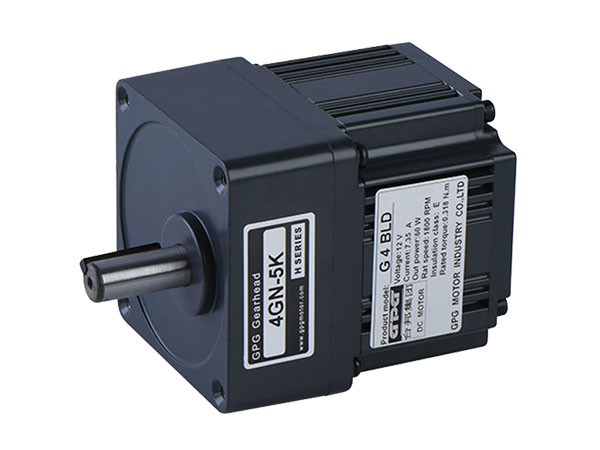
Mechanical synergy: Pairing these systems into a single-phase gear motor configuration provides necessary torque multiplication for commercial applications without requiring high-voltage infrastructure.
Application limits: Best suited for applications under 10 HP; not ideal for continuous heavy-industrial overloads.

You cannot evaluate a motor strictly on its theoretical electrical efficiency. You must look at how it integrates into the real world. Technical features directly translate into tangible business outcomes. Single-phase setups excel because they align perfectly with existing electrical grids.
The standard two-wire configuration fundamentally matches modern commercial infrastructure. It uses a simple line and neutral setup. You do not need highly specialized electrical panels to get things running. This creates an immediate "plug-and-play" agility for businesses.
Think about remote agricultural sites, retail spaces, or light-commercial zones. In these areas, high-voltage three-phase power is often unavailable. Running new utility lines to a remote barn or a leased retail storefront is incredibly cost-prohibitive. Single-phase systems bypass this barrier completely. They leverage the grid you already have, allowing rapid deployment without engaging utility companies for costly upgrades.
Capital preservation matters when deploying mechanical systems. Choosing a single-phase setup drastically lowers your initial infrastructure costs. In localized setups, it reduces transmission losses, meaning you require fewer substations to manage the power flow.
Furthermore, the physical materials cost much less. You use thinner wire gauges. You build simpler control panels. Contractors spend less time pulling heavy conduit. This combination of cheaper materials and reduced labor hours makes single-phase units highly economical for initial installations.
Space is a premium commodity in commercial equipment design. High transmission efficiency at these lower voltages allows engineers to create lighter, more compact units. They fit into tight spaces where bulky industrial motors simply cannot go.
This compactness enables easier integration into confined commercial equipment. You will find them driving automated security gates, residential HVAC units, and commercial refrigeration systems. They deliver the necessary power without bloating the physical footprint of the final product.
Buyers often over-invest in unnecessary infrastructure. They assume bigger is always better. However, a proper decision-stage comparison prevents this costly mistake. You must evaluate the true return on investment (ROI) before writing a purchase order.
We must acknowledge a core engineering fact. Three-phase motors offer higher baseline electrical efficiency. They provide smoother power delivery due to their 120-degree phase separation. They do not experience the same pulsating power drops.
However, we must also confront the "Retrofit Reality." The commercial ROI of a highly efficient three-phase motor vanishes instantly if your facility requires a complete electrical grid overhaul. Tearing open walls, upgrading main breaker panels, and paying industrial electricians will quickly erase any minor electrical efficiency savings. You end up spending thousands of dollars just to run a slightly more efficient motor.
Single-phase setups consume significantly less power for low-demand applications. They are built for the reality of intermittent use. When you run a conveyor belt for a few hours a day, the power savings of a complex industrial unit never materialize.
Three-phase systems undeniably handle larger loads more economically. Once you cross the 10 HP threshold, they become necessary. However, single-phase dominates the payback period for sub-10 HP continuous operations. For these smaller loads, the initial capital savings heavily outweigh long-term electrical consumption differences.
System Type | Ideal Load Range | Infrastructure Need | Primary ROI Driver |
|---|---|---|---|
Single-Phase | Under 10 HP | Standard 110V/220V Outlets | Low initial deployment and zero retrofit cost. |
Three-Phase | Above 10 HP | Industrial 3-Phase Grid | High operational efficiency at continuous heavy loads. |
Engineering always involves trade-offs. Single-phase systems are accessible, but they face specific mechanical limitations. Fortunately, smart mechanical integration solves these electrical shortcomings.
By design, standard single-phase variants inherently lack the massive starting torque found in industrial units. They struggle to move heavy loads from a dead stop. However, adding a precision gearbox completely changes the equation.
A gearbox multiplies the output torque while reducing the rotational speed. This creates a highly capable single-phase gear motor. It allows you to tackle heavy-duty physical tasks while still plugging into a standard wall outlet. You gain industrial-level pushing power without paying for industrial-level electricity.
When you combine widespread grid accessibility with gear-reduced torque, several industries benefit immensely. Here are three ideal environments:
Commercial Food Processing: High-torque dough mixers and heavy-duty coffee machines require massive rotational force. They must operate quietly in cafes and bakeries using standard 220V or 110V power lines. A geared setup provides the necessary muscle while maintaining a compact, quiet profile.
Material Handling: Think about checkout conveyor belts or small warehousing sorting lines. Standard wall power is often the only option available in these spaces. Geared units deliver smooth, consistent pulling power to keep materials moving.
Fluid Management: Residential and light-commercial water pumps must push heavy columns of water. They must also tolerate the voltage fluctuations common in residential grids. Geared integration ensures reliable fluid transfer under varying pressures.
Trust requires objective analysis. We cannot ignore the structural constraints of these systems. Skeptical engineers want to know where a system fails. Understanding these limits allows you to design effective mitigation strategies.
Because they run on a single alternating current, these motors produce a pulsating magnetic field. They do not naturally generate a rotating magnetic field. Therefore, they require start capacitors, run capacitors, or auxiliary windings to initiate rotation.
Capacitors are chemical components. They degrade over time. If a start capacitor fails, the unit will simply hum and refuse to spin, eventually overheating.
Risk Mitigation: Establish strict preventive maintenance schedules. Treat capacitors as consumable wear items. Inspect them annually for bulging, leaking, or capacitance drop, as they are the most common point of failure.
Power delivery drops to zero twice per AC cycle. This inherent design trait results in slightly more vibration compared to the ultra-smooth delivery of a 120-degree separated industrial unit. You must account for this micro-vibration in high-precision equipment.
Furthermore, they exhibit poor tolerance for severe overloading. If a machine jams frequently, a single-phase unit will stall and overheat much faster. Applications prone to mechanical jamming require strict evaluation and robust thermal overload protection.
Physics dictates a hard ceiling for this technology. The industry consensus is clear: upgrading past 10 HP yields rapidly diminishing returns. Pushing massive power through two wires creates excessively high current draw. This melts standard wiring, trips breakers, and requires dangerously thick copper cables. If your application demands 15 HP, you must upgrade your facility.
Selecting the right equipment requires more than looking at a horsepower rating. Buyers must evaluate environmental durability, electrical resilience, and regulatory compliance. Use these actionable criteria when shortlisting suppliers.
Local electrical grids are rarely perfect. Voltage sags and spikes happen constantly, especially in agricultural or end-of-line industrial zones. Look for asynchronous designs rated to handle wide voltage fluctuations.
A high-quality unit will feature a ±15% voltage tolerance. This ensures the unit remains stable, does not overheat, and continues producing torque even when the local utility grid struggles to deliver consistent power.
Where you place the equipment dictates the enclosure you need. Open drip-proof (ODP) designs work fine in clean, indoor environments. However, commercial applications are rarely clean.
Always specify TEFC (Totally Enclosed Fan Cooled) designs if the unit will face harsh conditions. TEFC seals the internal windings against dust, debris, and moisture. This is an absolute requirement for outdoor agricultural setups, commercial car washes, or any wash-down environment in food processing.
Do not accept vague marketing claims about energy efficiency. Demand proof. Verify that the manufacturer tests their products against recognized international standards.
Look for testing compliance with protocols like IEEE 112-2004 or CAN/CSA C390-10. If operating in North America, ensure the unit meets regional benchmarks like 10 CFR 431. These certifications guarantee that the motor actually delivers the energy savings promised on the specification sheet.
Choosing the right motor framework shapes the financial health of your project. Single-phase setups offer unmatched deployment flexibility. They eliminate the need for expensive facility rewiring, delivering massive infrastructure cost savings for loads under 10 HP. By utilizing geared variations, you can even solve complex torque challenges without relying on an industrial electrical grid. They remain the smartest, most practical choice for commercial and light-industrial applications.
Before requesting vendor quotes, take action. Audit your facility’s current electrical supply. Map your available voltage directly against your actual starting torque requirements. By understanding your true operational needs, you can procure a highly reliable system that protects your budget and performs flawlessly.
A: Yes, it can be reversed. However, it requires changing the polarity of the start winding relative to the run winding. You must physically alter the internal connections. It is not as simple as swapping two power leads, which is how you reverse a three-phase system.
A: The alternating current creates a pulsating magnetic field rather than a continuous rotating one. Because power drops to zero twice per cycle, the unit experiences micro-vibrations. This mechanical pulsation translates directly into the characteristic audible hum you hear during operation.
A: Yes, for specific applications. For high-end commercial equipment like HVAC systems, using a phase-converting VFD is a common workaround. It grants you the operational smoothness and efficiency of a three-phase unit without the massive expense of rewiring the entire facility, though you must factor in the VFD's purchase cost.