Views: 0 Author: Site Editor Publish Time: 2026-06-13 Origin: Site


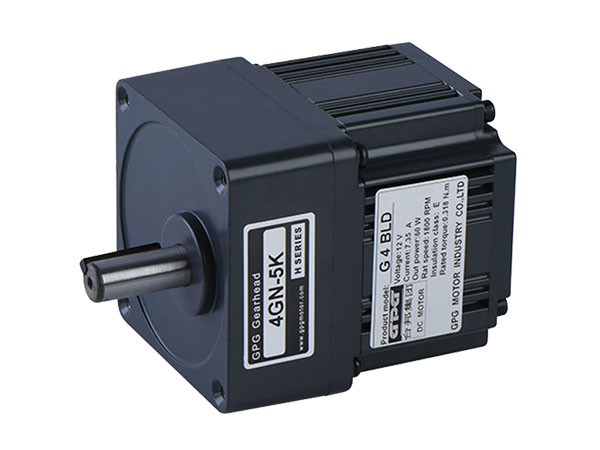
Bare DC motors often spin uncontrollably fast. They typically operate between 1,500 and 6,000 RPM. At these excessive speeds, they generate insufficient torque for direct load manipulation. This fundamental limitation forces engineers to find reliable mechanical ways to control output. Enter the DC gear motor. It serves as a combined mechanical and electrical assembly. It resolves this speed issue by converting raw electrical energy into controlled, high-torque, low-speed mechanical output.
You need the right motor configuration to make your product successful. This evaluation guide helps engineers and product designers properly match motor configurations, gear ratios, and duty cycles to specific application constraints. By understanding these dynamics, you can confidently build smarter, more efficient mechanical systems without over-engineering your solution.
DC gear motors solve the high-speed/low-torque limitation of bare motors, allowing designers to downsize equipment by utilizing mechanical advantage.
Selecting the right unit requires balancing the inverse relationship between speed (RPM) and torque (lb-in/kg-cm) against target efficiency zones.
Not all applications benefit from a gearbox; closed-loop systems highly sensitive to backlash or thermal loss require specialized configurations or direct-drive alternatives.
Evaluating a DC small gear motor involves precise calculation of inertial loads, which scale by the square of the gear ratio.

Engineers face a constant battle between physical space and mechanical power. You cannot always fit a massive motor into a compact device. This section explores how adding a transmission system fundamentally alters motor capabilities.
Integrating a gearbox into your assembly allows a compact DC motor to output the equivalent torque of a much larger, gearless motor. We call this the downsizing principle. Instead of relying purely on electromagnetic force to twist a heavy load, you leverage mechanical reduction. This drastically reduces the overall footprint of your device. It also lowers raw material consumption. You achieve the same lifting or pushing power while keeping your product lightweight and portable.
You must calculate expected performance to guarantee reliability. Torque output relies on a straightforward mathematical formula. You calculate it by multiplying the base motor torque by the gear ratio and the gear efficiency rating. While the gearbox amplifies the torque, it proportionally reduces the rotational speed. For example, applying a 10:1 gear ratio to a 3,000 RPM motor running at 2 lb-in of torque yields roughly 300 RPM. Assuming an 80% transmission efficiency, it delivers about 16 lb-in of torque. This predictable exchange gives you precise control over mechanical output.
Unpredictable weight shifts can destroy delicate machinery. Adding a gearbox dramatically increases the allowable driven inertial load. It handles these loads exponentially better. Specifically, the capacity scales by the square of the gear ratio. If you use a 5:1 ratio, your system can handle 25 times the inertial load of a bare motor. This phenomenon dramatically improves damping characteristics. It provides incredible rigidity against sudden load fluctuations. Your equipment stops smoothly without violent shuddering.
Understanding where a geared system thrives helps you avoid costly design mistakes. They excel in high-resistance environments, but they are not universal solutions.
Robotics and Automation: Robotic arm actuation, gripping mechanisms, and automated guided vehicles (AGVs) demand high starting torque. They need to move heavy items from a dead stop accurately.
Medical and Ergonomic Equipment: Hospital beds, electric wheelchairs, and patient lifts rely on these systems. In these environments, smooth, variable speed control proves absolutely critical for patient safety and comfort.
Industrial Handling: Heavy-duty conveyor belts, precise peristaltic pumps, and rhythmic packaging machines utilize geared motors. They maintain consistent pacing under varying weight conditions.
You should not use a gearbox for every rotating mechanism. Sometimes, direct-drive solutions work better.
High-Speed Requirements: Applications like cooling fans or centrifuges fail when restricted. In these devices, pure RPM stands as the primary success metric. Adding gears only slows them down.
Zero-Backlash Environments: Precision CNC machines or optical tracking mounts require absolute positional accuracy. Standard gear play compromises this accuracy. Unless you specify specialized harmonic drives, standard gearboxes introduce unacceptable tolerance errors.
Thermal and Acoustic Sensitivity: Complex gear trains waste energy. Multi-stage planetary units can waste up to 25% of input power as heat and noise. This makes them unsuitable for specific closed-loop or ultra-quiet laboratory environments.
Choosing the correct internal components dictates the lifespan of your machine. When you specify a DC small gear motor, you must evaluate both the mechanical gear layout and the electrical commutation method.
The physical arrangement of the gears determines space efficiency, torque limits, and cost.
Gearbox Topology | Design Characteristics | Best Use Case | Limitations |
|---|---|---|---|
Spur Gears | Parallel shaft design. Highly cost-effective to manufacture. | Ideal for medium torque applications and budget-conscious designs. | Less space-efficient. Can be noisier at higher speeds. |
Planetary Gears | Compact cylindrical footprint. Shares load across multiple gear faces. | High torque density in constrained spaces. Excellent for heavy industrial use. | Requires specifying metal over plastic gears for high-load durability to prevent stripping. |
Worm Gears | Right-angle output. Intrinsically self-locking design (resists back-driving). | Hoists, lifts, or anywhere a load must hold position when power drops. | Susceptible to rapid lubrication loss due to sliding friction. Less efficient. |
Beyond the gears, you must choose how the motor itself processes electrical current. This drastically affects maintenance schedules.
PMDC / Brushed: Traditional Permanent Magnet DC motors offer a low initial integration cost. They feature highly simple two-wire control systems. However, they carry a major risk factor. Carbon brush wear naturally limits their lifespan. As brushes wear down, they introduce physical sparks and conductive dust. This disqualifies them from certain cleanroom or flammable environments.
Brushless (BLDC): These advanced motors utilize Hall effect sensors and electronic commutation. They completely eliminate the physical brushes. This results in a higher upfront cost and requires more controller complexity. However, the investment pays off. Brushless configurations deliver 70% to 90% running efficiency. They eliminate mechanical wear entirely, ensuring thousands of hours of reliable operation.
Manufacturer catalogs often present a maze of charts. You must interpret these performance curves accurately to prevent catastrophic field failures.
You must understand the linear inverse relationship between speed and power. As load (torque) increases, rotational speed (RPM) predictably drops. If you push a motor harder, it spins slower.
You also need to identify the peak efficiency operational zone. Beginners often make a critical mistake. They specify a motor based on its maximum torque capacity. You should never do this. Instead, specify motors to operate near their maximum efficiency point. This usually sits around 70% of the maximum torque range. Operating here minimizes heat generation and maximizes battery life.
Motors have absolute breaking points. You must design safety margins into your system.
Stall Torque and Stall Current: This defines the exact point where the motor stops rotating under a heavy load. When a motor stalls, it causes a massive spike in current draw. If your system is not electronically limited, this spike will rapidly cause irreversible thermal failure.
Duty Cycle Realities: Continuous operation sounds ideal, but it rarely reflects reality. While continuous running is technically possible, manufacturers routinely recommend a 50% duty cycle for standard compact units. This off-time allows the unit to manage heat dissipation effectively.
Avoid guessing when selecting components. Follow this strict, four-step evaluation framework to ensure optimal performance and longevity.
Do not open a vendor catalog until you finish your math. First, determine the continuous running torque required to keep your mechanism moving. Next, calculate the required acceleration torque needed to break initial static friction. Finally, define the acceptable RPM range. These baseline numbers form your non-negotiable search criteria.
Audit your available power supply. You must ensure the system can handle the peak startup current. Always distinguish between no-load current ratings and full-load demands. A power supply might easily handle the motor while free-spinning, but instantly trip a breaker the moment the gears engage a physical load.
Motors do not just experience rotational stress. They experience physical pushing and pulling. Verify that the output shaft bearings can handle lateral (radial) forces. These occur when you attach tight belts or pulleys. You must also account for thrust (axial) forces. These happen when the load pushes directly inward against the shaft. Exceeding these limits destroys the bearings.
A perfect motor will fail if exposed to the wrong environment. Check the specific IP (Ingress Protection) ratings against operational realities. Does your machine face heavy dust or direct moisture? Confirm the housing materials align with these threats. Furthermore, verify that the housing accommodates necessary thermal dissipation requirements for your chosen duty cycle.
Specifying a reliable geared motor is an exercise in strict engineering balance. You must carefully weigh mechanical torque requirements against non-negotiable electrical and thermal limits.
Always prioritize the downsizing principle to keep assemblies lightweight and cost-effective.
Calculate inertial loads strictly by the square of your selected gear ratio.
Never operate continuously at maximum torque; target the 70% peak efficiency zone instead.
Select your gearbox topology (spur, planetary, or worm) based on space limits and back-driving risks.
Finally, theoretical calculations only get you so far. We strongly recommend prototyping with multiple gear ratios. This allows you to empirically validate the theoretical performance curve against actual dynamic loads in the field.
A: DC options offer superior starting torque and much higher power density in smaller spaces. They also provide much simpler variable speed control. Conversely, engineers generally select AC motors for continuous, fixed-speed operations requiring near-zero maintenance.
A: Lifespan is always dictated by the weakest link. In brushed motors, carbon brush wear limits life to roughly 1,000 to 3,000 hours. In brushless configurations, lifespan relies entirely on gearbox bearing and lubrication life, potentially exceeding 10,000 hours.
A: No. Stalling causes immediate electrical overheating and potential mechanical gear stripping. You can only stall them safely if the system is equipped with active current-limiting controllers or physical mechanical slip clutches.