Views: 0 Author: Site Editor Publish Time: 2026-03-05 Origin: Site


AC (Alternating Current) gear motors are essential components in a wide range of industrial applications. These motors combine the benefits of an AC motor with the power of a gear system to produce reliable torque and speed control for various types of machinery and equipment. AC gear motors are widely used in areas such as automation, robotics, conveyor systems, HVAC, and more.
While they all serve the same purpose—converting electrical energy into mechanical motion—AC gear motors come in several types, each designed for specific applications. Understanding these different types of AC gear motors is crucial for selecting the best one for your particular needs.
In this article, we’ll explore the various types of AC gear motors, their features, benefits, and applications, helping you choose the right motor for your project.
Before diving into the different types of AC gear motors, let’s first define what an AC gear motor is and how it works.
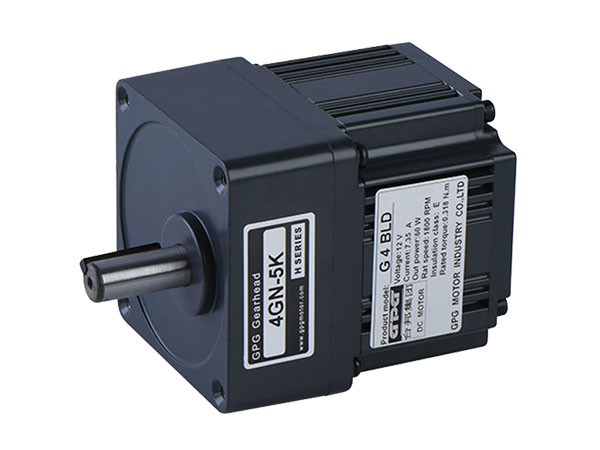
An AC gear motor is a combination of an AC motor and a gear reducer (also known as a gear head). The AC motor converts electrical energy into rotational motion, while the gear reducer is used to reduce the speed of the motor and increase the torque. The gear system enables the motor to deliver more power at lower speeds, making it suitable for applications that require consistent, reliable motion control.
The functioning of an AC gear motor is relatively straightforward. The AC motor uses alternating current to generate a rotating magnetic field, which causes the rotor to spin. This rotation drives the connected gear system, which reduces the speed and increases the torque of the motor. The gear system typically consists of a set of gears, including bevel gears, spur gears, or planetary gears, depending on the motor’s design.
The result is a motor that produces more power at a slower speed, making it ideal for applications where precise control and high torque are required.
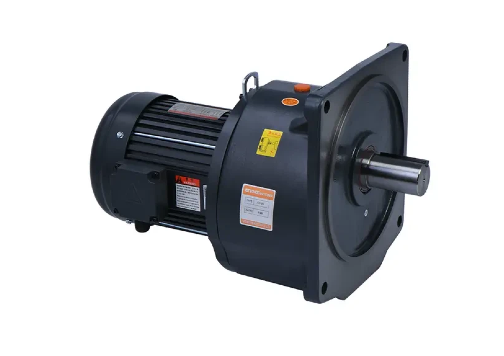
AC gear motors come in different types, each designed for specific applications based on the requirements of torque, speed, and efficiency. Here are the most common types of AC gear motors:
Induction motors, also known as asynchronous motors, are the most widely used type of AC motor. These motors operate based on the principle of electromagnetic induction, where current is induced into the rotor to create rotational motion. Induction motors are simple, reliable, and cost-effective, making them ideal for many industrial applications.
Key Features:
Simple Construction: Induction motors have a simple rotor and stator design, making them less prone to wear and tear.
Cost-Effective: Induction motors are inexpensive and easy to maintain.
Versatile: They can be used in various industries, from HVAC systems to conveyor belts and beyond.
Applications:
Conveyor systems
Pumps and fans
Industrial machinery
HVAC systems
Synchronous motors are another type of AC motor, but they operate differently from induction motors. In a synchronous motor, the rotor is magnetized either by a permanent magnet or an electromagnet. The rotor rotates at the same speed as the rotating magnetic field produced by the stator. This means that synchronous motors can run at a fixed speed, making them ideal for applications that require precise, constant speed.
Key Features:
Precise Speed Control: Synchronous motors provide accurate speed control, making them ideal for applications that require consistent speed.
High Efficiency: They offer better efficiency compared to induction motors, especially at higher loads.
Reliable: Synchronous motors are known for their durability and long life.
Applications:
Precision equipment
Electric clocks
High-speed fans and blowers
Industrial drives requiring constant speed
Planetary gear AC motors use a type of gear mechanism called a planetary gear set. In this system, the gears are arranged in such a way that multiple gears rotate around a central gear, distributing the load evenly across all the gears. Planetary gear motors are known for their compact design and ability to provide high torque while maintaining high efficiency.
Key Features:
High Torque and Compact Size: Planetary gear motors provide high torque in a small, compact design, making them ideal for applications with space limitations.
Efficiency: These motors offer high efficiency due to the even distribution of the load across the gears.
Durability: Planetary gear systems have fewer moving parts, making them more durable and long-lasting.
Applications:
Robotics
CNC machines
Conveyors and hoists
Automotive applications
Worm gear motors use a worm gear system, where a screw-like worm gear meshes with a gear wheel. This design is highly effective for applications that require high torque at low speeds. Worm gear motors are often used in situations where the gear ratio needs to be very high, and where backdriving (the ability of the motor to be turned by the load) is undesirable.
Key Features:
High Torque at Low Speeds: Worm gear motors are known for their ability to provide high torque at very low speeds.
Self-Locking: Worm gears typically have a self-locking mechanism, which means they can hold a load without the need for additional braking.
Compact Design: Worm gear motors are typically smaller and more compact than other types of gear motors.
Applications:
Elevators and lifts
Conveyor systems with heavy loads
Adjusting mechanisms in machinery
Food and beverage processing
AC servo motors are high-performance motors used in applications that require precise speed and position control. When combined with a gear system, AC servo motors provide accurate and controlled motion, making them ideal for high-precision applications. AC servo gear motors are commonly used in automation and robotics.
Key Features:
Precision Control: AC servo motors offer exceptional speed and position control, allowing for precise movements.
High Efficiency: These motors are efficient and can operate at high speeds without overheating.
Feedback Systems: AC servo motors often include feedback systems that allow for real-time monitoring and adjustment of speed and position.
Applications:
CNC machinery
Robotics and automation
Medical devices
High-precision manufacturing processes
AC brushed motors use brushes to transfer electricity to the rotor. While less efficient than brushless motors, brushed motors are often used in applications where cost is a primary consideration. When combined with a gear system, AC brushed gear motors can provide good performance at a lower cost.
Key Features:
Cost-Effective: Brushed motors are generally less expensive than their brushless counterparts.
Simple Design: The simplicity of brushed motors makes them easy to maintain.
Versatile: AC brushed motors can be used in a wide variety of applications.
Applications:
Household appliances
Small machinery
Power tools
AC brushless gear motors, as the name suggests, use a brushless design, which eliminates the need for physical brushes. This results in higher efficiency, longer lifespan, and reduced maintenance compared to brushed motors. These motors are often used in applications requiring high reliability and minimal maintenance.
Key Features:
Longer Lifespan: Brushless motors have a longer operational life due to the absence of brushes that wear out over time.
Higher Efficiency: AC brushless motors are more efficient, especially in high-speed applications.
Low Maintenance: These motors require less maintenance due to the lack of brushes and commutators.
Applications:
Electric vehicles
Industrial automation
HVAC systems
High-precision machinery
Choosing the right AC gear motor depends on several factors, including:
Torque and Speed Requirements: Depending on whether your application requires high torque or high speed, you will need to choose the appropriate type of motor and gear system.
Size and Space: Some applications may require compact, space-saving solutions. Planetary gear motors are ideal in such cases.
Precision: For high-precision applications, an AC servo gear motor may be necessary to meet your accuracy requirements.
Environment and Conditions: Consider factors like temperature, humidity, and the presence of dust or chemicals in the operating environment. Make sure the motor is built to handle these conditions.
AC gear motors are versatile and widely used across various industries, from manufacturing to robotics, HVAC to automotive applications. The different types of AC gear motors, including induction, synchronous, planetary, worm gear, servo, and brushed motors, offer distinct advantages depending on the requirements of the application. Understanding the key features and benefits of each type will help you choose the right motor to optimize your operations.
For high-quality AC gear motors designed to meet your specific needs, Taibang Motor Industry Group Co., Ltd. offers a comprehensive range of reliable and efficient solutions. Their expert team is available to help you select the right gear motor and ensure it meets the performance standards for your application.
Q: What is the difference between AC and DC gear motors?
A: AC gear motors run on alternating current, while DC gear motors use direct current. AC motors are typically used for high-torque applications, while DC motors are better suited for precise control.
Q: Can AC gear motors be used in outdoor environments?
A: Yes, but you must ensure that the motor is properly sealed and protected from the elements, such as rain and dust. Weatherproof and rugged designs are available for outdoor applications.
Q: What industries use AC gear motors?
A: AC gear motors are used in a wide range of industries, including robotics, manufacturing, automotive, HVAC, packaging, and more.
Q: How do I maintain my AC gear motor?
A: Regular maintenance includes checking for wear on the gears, cleaning the motor, ensuring proper lubrication, and inspecting the motor for overheating or damage.