Views: 0 Author: Site Editor Publish Time: 2026-04-20 Origin: Site


When selecting or wiring a dc gear motor, one of the most practical questions is whether polarity matters. The answer is yes. In most cases, a DC gear motor is polarity-sensitive, which means the positive and negative connections influence how the motor operates, especially its rotation direction. This is a basic electrical characteristic, but it has a direct impact on installation, direction control, troubleshooting, and long-term equipment performance.
For many users, polarity seems like a simple wiring detail. In reality, it is closely connected to how a DC motor generates motion and how that motion is transmitted through the gearbox. If the power connection is reversed, the motor may turn in the opposite direction. In some applications, that is completely normal and even useful. In others, it can cause functional errors, mechanical interference, or control problems. That is why understanding polarity is important not only for engineers, but also for OEM buyers, maintenance teams, and equipment manufacturers.
This article explains how polarity works in a dc gear motor, why it matters, how different types of DC gear motors respond to polarity, and what users should pay attention to when selecting and wiring a motor for industrial or commercial use.
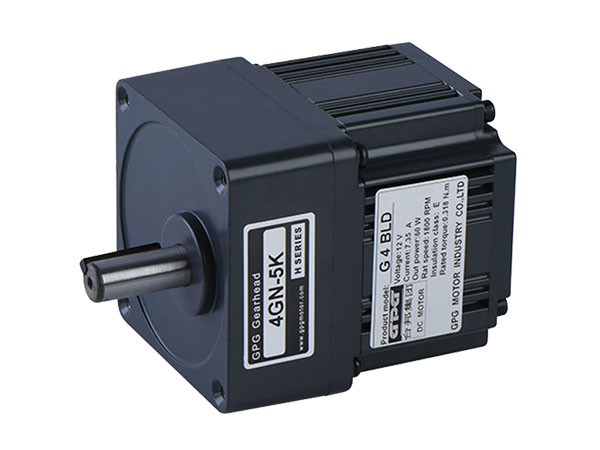
A dc gear motor combines two essential sections into one drive unit: a DC motor and a gearbox. The motor converts electrical energy into rotational movement, while the gearbox reduces speed and increases torque. The polarity belongs to the electrical side of the system, but its effect is visible in the mechanical output.
In direct current systems, electricity flows in a defined direction. That means the positive and negative terminals are not interchangeable unless reverse operation is intended by design. In a standard DC motor, the direction of current flow affects the direction of the electromagnetic force inside the motor. As a result, the motor shaft rotates in one direction under one polarity arrangement and in the opposite direction when the polarity is reversed.
Since the gearbox is mechanically connected to the motor shaft, the gearbox output follows the motor’s rotation. In simple terms, if the motor turns forward, the gear output turns forward. If the motor turns backward, the gear output turns backward as well. This is why polarity matters so much in a dc gear motor assembly.
Polarity is not just an electrical theory topic. It directly affects how equipment behaves in actual use. A motor driving a conveyor, feeder, actuator, gate, valve, or packaging mechanism must rotate in the intended direction to perform correctly. If the polarity is wrong, the machine may move backward instead of forward, open instead of close, or feed material in the wrong sequence.
In many small and medium-sized machines, direction control is one of the main reasons DC gear motors are used. Because reversing polarity can reverse motor direction, DC systems are often easier to control than more complex alternatives. This gives designers flexibility, but it also means installation accuracy becomes more important.
Polarity matters most in three areas:
The most immediate effect of polarity is output direction. If the motor is expected to run clockwise and the power connection is reversed, it may run counterclockwise instead. In systems with forward and reverse operation, this can be useful. In single-direction systems, it can create functional failure.
Some machines are designed with one-way travel, limited stroke, or directional locks. If a dc gear motor rotates the wrong way because of incorrect polarity, the driven mechanism may jam, hit an end stop, or place unexpected stress on parts.
When a machine behaves abnormally, polarity is often one of the first things technicians check. A motor that runs in the wrong direction may not be defective at all. It may simply be wired incorrectly or controlled with reversed logic.
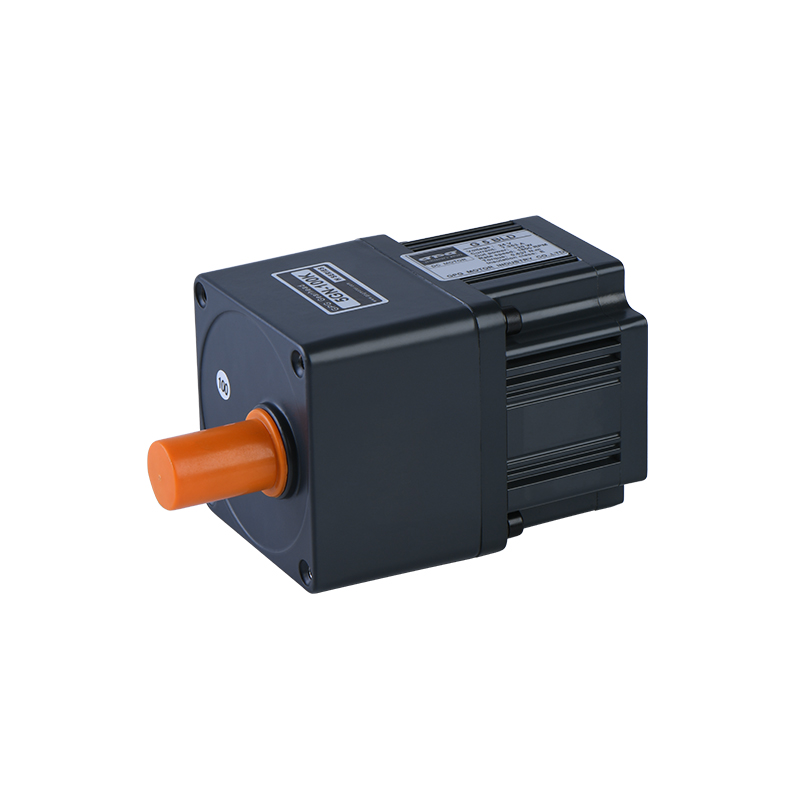
The most common example is the brushed dc gear motor. In this design, electrical current flows through brushes and a commutator into the armature winding. The magnetic interaction inside the motor creates torque and causes the rotor to spin. Because the current flow direction determines the magnetic force direction, polarity directly controls rotational direction.
If the positive lead is connected to one terminal and the negative lead to the other, the motor rotates in a certain direction. If the leads are swapped, the motor rotates in the opposite direction. The gearbox then transmits that reversed rotation to the output shaft.
This characteristic is one of the reasons brushed dc gear motors remain popular in many compact motion systems. They are easy to integrate, easy to reverse, and suitable for applications that require simple bidirectional movement. A designer can achieve forward and reverse control through a switching circuit, relay arrangement, or H-bridge controller without needing overly complex drive architecture.
Brushless DC gear motors also use direct current, but their control method is different. Instead of mechanical commutation through brushes and a commutator, a brushless motor relies on an electronic driver to energize the windings in the correct sequence. Because of this, polarity still matters, but not in exactly the same way as with a simple brushed motor.
In a brushless system, polarity is primarily important at the driver input. The driver receives DC power and then manages motor commutation electronically. Motor direction is usually controlled by the driver logic rather than by physically swapping the power leads on the motor itself. That means users should not assume a brushless dc gear motor can be handled the same way as a two-wire brushed motor.
This is especially important for industrial buyers and system integrators. A brushless dc gear motor often offers higher efficiency, longer life, lower maintenance, and more advanced speed control, but it also requires correct matching between the motor and driver. In these systems, polarity errors can affect not only motion direction but also controller protection, startup behavior, and overall system reliability.
To understand why polarity changes direction, it helps to think about the basic operating principle of a DC motor. A DC motor works by creating interaction between a magnetic field and a current-carrying conductor. When the direction of current changes, the direction of the resulting force changes as well. That is why reversing polarity reverses rotation in many DC motors.
In a dc gear motor, the gearbox does not create this effect, but it transmits it. The gearbox simply modifies speed and torque through gear reduction. If the motor reverses, the gear output reverses. This means the final output shaft direction is directly tied to the motor’s response to polarity.
From a practical viewpoint, this makes DC gear motors extremely useful in applications that need:
forward and reverse movement
controlled start and stop behavior
simple wiring-based direction testing
compact torque output in both directions
That said, repeated reversing under load should still be evaluated carefully. The motor may be electrically capable of reversing direction, but the gearbox, load inertia, and mechanical system must also be suitable for that operating condition.
In a typical brushed dc gear motor, reversing polarity usually makes the motor spin in the opposite direction. This is not automatically a fault. In fact, many machines are designed specifically to use reverse polarity for directional control. However, whether this reversal is acceptable depends on the application and on the construction of the motor system.
In applications such as small conveyors, automatic doors, vending mechanisms, lifting devices, and actuator systems, reverse direction is often required. In these cases, reversing polarity is a normal part of operation. The motor, gearbox, and connected mechanism are selected with that function in mind.
Some equipment is built to run in only one direction. If polarity is reversed by mistake during installation, the output may move the wrong way. This can cause process errors, assembly issues, or mechanical stress on driven parts.
If the gear motor includes accessories such as encoders, brakes, Hall sensors, or built-in electronics, polarity reversal may affect more than just rotation direction. It may interfere with signal interpretation or damage sensitive electronic components if the system is not designed for reverse polarity tolerance.
For a basic two-wire brushed dc gear motor, simply reversing the positive and negative connections will usually not damage the motor itself. It will generally just rotate in the opposite direction. This is one of the convenient features of brushed DC motors and one reason they are often chosen for simple motion control systems.
However, users should not assume that every dc gear motor is equally tolerant. Whether wrong polarity causes damage depends on the full motor assembly and the application environment. A gear motor with an internal control board, electromagnetic brake, encoder, or driver-related electronics may have stricter polarity requirements. In these cases, incorrect wiring may damage electronic parts even if the motor section alone would survive.
There is also the question of mechanical safety. Even when the motor itself is unharmed, the machine may not be. A reverse-running shaft can jam a feeder, overload a stop mechanism, or disrupt a synchronized motion sequence. So from an engineering perspective, the safer conclusion is this: basic DC motors often tolerate reversed polarity, but complete motor systems should always be wired according to specification.
Correct polarity identification is an important part of installation and maintenance. Most professional motor manufacturers provide multiple ways to confirm wiring direction. These may include terminal markings, wire colors, label stickers, product drawings, or datasheet instructions.
When checking a dc gear motor, users should focus on the following sources of information:
Many motors have clear positive and negative symbols near the terminals. These are the most direct reference points and should be checked before power is applied.
In some assemblies, wire color indicates polarity. This is common in OEM harnesses and compact motor products, though the exact color standard may vary by supplier.
The datasheet often specifies terminal assignments, rated voltage, rotation reference, and recommended wiring method. This is the most reliable source for confirmation, especially in industrial purchasing or engineering design.
If the motor is part of a complete machine, the equipment wiring diagram should be checked as well. Sometimes the motor terminals are correct, but the control output logic is reversed elsewhere in the system.
Although polarity matters in any DC-powered system, it becomes especially critical in applications where direction directly affects product movement, timing, or positioning accuracy. A dc gear motor is often selected precisely because it can offer compact, high-torque output with flexible direction control. That advantage becomes a risk if polarity is misunderstood.
Several application areas deserve special attention.
In conveyor systems, wrong polarity can reverse transport direction and interrupt the production flow. This is particularly important in logistics, packaging, and sorting equipment where synchronized motion is required.
Linear or rotary actuation systems often depend on forward and reverse operation for extension and retraction. Polarity errors can cause opposite movement and affect positioning or sealing functions.
In compact precision equipment, direction errors may affect dosing, feeding, or sample handling. Even small polarity mistakes can create unacceptable deviations in sensitive devices.
In robotic modules, automated doors, smart locks, or mobile devices, polarity directly affects motion logic. Correct directional response is essential for both function and user safety.
Good wiring practice reduces mistakes, protects components, and makes future maintenance much easier. Even though polarity can seem basic, many field problems come from rushed installation or incomplete verification. A careful process helps avoid both electrical and mechanical issues.
When wiring a dc gear motor, it is best to follow several practical guidelines:
confirm voltage and polarity from the manufacturer’s datasheet before installation
label connectors and harnesses clearly during assembly
test rotation direction under controlled conditions before full-load operation
verify whether the gearbox and load system are intended for bidirectional use
check for added components such as encoders, brakes, and sensors that may have separate polarity requirements
These steps are especially important in OEM projects and repeated production environments. A small wiring inconsistency can become a large-scale service problem if it is carried across multiple units.
Polarity is not usually the first parameter buyers look at when selecting a dc gear motor. Most people focus first on voltage, speed, torque, gear ratio, and size. Those are all essential, but polarity behavior should also be considered as part of the overall application design.
If the motor must reverse frequently, then the gearbox structure, load condition, and control method should all be suitable for repeated directional changes. If the application is forward-only, then polarity may mainly matter during installation and servicing. If the system uses a brushless motor, then driver compatibility becomes part of the polarity discussion as well.
This means motor selection should never be based on electrical ratings alone. The more complete approach is to consider the entire drive task: load direction, starting condition, duty cycle, mechanical interface, control architecture, and expected service life. When these factors are reviewed together, it becomes much easier to choose a dc gear motor that performs reliably in real operation.
So, do gear dc motor have polarity? Yes, in most cases they do. A dc gear motor is a polarity-sensitive drive device, and polarity plays a direct role in current flow and rotation direction. In a brushed dc gear motor, reversing the positive and negative connections usually reverses shaft direction. In a brushless dc gear motor system, polarity still matters, but it is managed through the driver and control logic rather than through simple two-wire swapping alone.
Understanding polarity is essential for correct installation, safe operation, and effective troubleshooting. It also helps users choose the right motor structure for their application, especially when direction control is part of the working requirement. For companies that need reliable motion solutions, working with an experienced gear motor manufacturer can make selection much easier. Taibang Motor Industry Group has developed a broad product portfolio covering micro AC geared motors, small AC gear motors, DC brushed gear motors, DC brushless gear motors, planetary gearheads, and roller drum motors. Backed by long-term manufacturing experience, strong engineering capability, and a focus on practical application matching, the company supports customers who need dependable drive solutions for automation, conveyor systems, packaging machinery, and other industrial motion projects.
Most dc gear motors do have defined positive and negative connections. In a standard brushed motor, these terminals determine current flow and influence rotation direction. Brushless systems also use polarity, but usually through the driver input.
For a typical two-wire brushed dc gear motor, yes, reversing polarity usually reverses direction. For brushless dc gear motors, direction is generally controlled through the electronic driver, so the behavior depends on the system design.
A simple brushed dc gear motor usually will not be damaged just because polarity is reversed. However, motors with integrated electronics, sensors, or control modules may be more sensitive, and the connected machine may also be affected by reverse motion.
You should check the product label, terminal marks, wire colors, technical datasheet, or machine wiring diagram. For custom or OEM systems, verified assembly documentation is the safest reference.
Polarity affects direction, and direction affects machine function. In conveyors, actuators, packaging systems, robotics, and other motion equipment, incorrect polarity can cause reverse movement, timing errors, and mechanical problems.