Views: 0 Author: Site Editor Publish Time: 2026-04-15 Origin: Site


A DC gear motor is one of the most widely used power transmission solutions in modern equipment. From automated dispensers and medical devices to conveyors, vending machines, smart locks, and compact industrial systems, this type of motor is valued for its ability to deliver controlled speed, higher torque, and reliable motion in a compact package. While many people are familiar with the term, fewer fully understand how a dc gear motor actually works and why it is so useful in real-world applications.
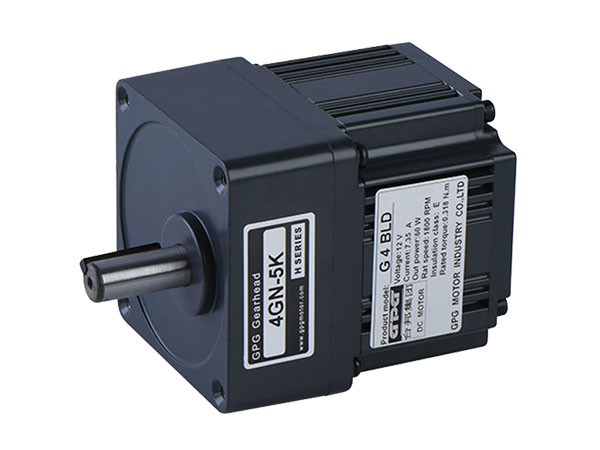
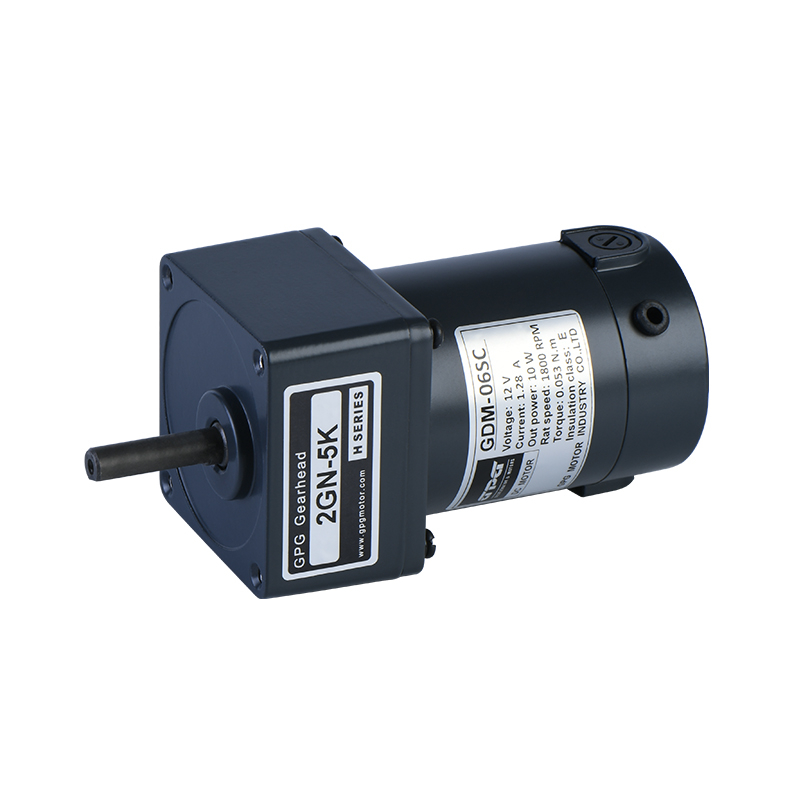
At its core, a dc gear motor combines two key components into one integrated drive system: a DC motor and a gearbox. The motor generates rotational motion using direct current electricity, while the gearbox modifies that motion to better match the needs of the application. In most cases, the gearbox reduces output speed and increases torque, making the motor more practical for loads that require steady, powerful, and controlled movement rather than extremely fast spinning.
Understanding how this system works is important for engineers, buyers, equipment manufacturers, and anyone selecting motion components for a product. Once you understand the relationship between electrical input, motor rotation, gear reduction, and output performance, it becomes much easier to choose the right solution for your application. In this article, we will explain how a dc gear motor works, what its main parts do, why a gearbox is needed, and where this type of motor is commonly used.
A dc gear motor is an electric motor powered by direct current and combined with a gear reduction mechanism. The DC motor itself is designed to convert electrical energy into mechanical rotation. However, a standard DC motor often spins at a speed that is too high and delivers torque that is too low for many practical tasks. This is where the gearbox becomes essential.
The gearbox is mounted to the motor and contains a set of gears arranged to reduce the motor’s speed before power reaches the output shaft. When speed is reduced through gear reduction, torque increases proportionally, allowing the motor to move heavier loads or provide more controlled force. This makes the dc gear motor ideal for applications that need compact size, precise movement, and dependable torque output.
In simple terms, if a regular DC motor is like a runner moving very fast but carrying little weight, a dc gear motor is like a trained worker moving at a more controlled pace while handling a much heavier load. That is why gear motors are so popular in automation systems and compact drive assemblies.
To understand how a dc gear motor works, it helps to look at the process step by step. First, electrical power in the form of direct current is supplied to the motor. This current flows through the motor’s internal circuit and creates a magnetic interaction that causes the rotor to turn. The rotating motor shaft then transfers that motion into the gearbox.
Inside the gearbox, the rotational speed is adjusted through a sequence of meshing gears. Each gear stage changes the relationship between input speed and output speed. As the speed decreases, torque increases. The final result is a slower but stronger rotational output at the shaft of the gear motor. This output can then be used to drive wheels, belts, rollers, arms, actuators, or other mechanical systems.
So the full working principle can be summarized like this: electrical energy enters the motor, the motor converts it into rotary motion, the gearbox modifies that motion, and the output shaft delivers usable mechanical power. Although the concept is straightforward, the effectiveness of a dc gear motor depends heavily on motor quality, gearbox design, material precision, gear ratio selection, and overall manufacturing accuracy.
A dc gear motor may look compact from the outside, but internally it includes several important components working together as one system. Each part plays a specific role in producing reliable motion and stable output.
The motor section is responsible for generating rotary motion. In a brushed DC motor, current passes through brushes and a commutator to energize the armature windings. This creates magnetic forces that interact with the fixed magnetic field, causing the rotor to spin. In brushless versions, electronic commutation replaces the mechanical brush system, but the overall goal remains the same: converting direct current into rotational movement.
The motor section determines the basic speed, input power characteristics, and responsiveness of the unit. Without the motor, there would be no rotational energy to transmit into the gearbox.
The gearbox is attached to the motor shaft and contains multiple gears arranged in a reduction train. Its purpose is to lower speed and multiply torque. Depending on the design, the gearbox may use spur gears, planetary gears, worm gears, or right-angle gear structures. Each type offers different advantages in terms of compactness, load capacity, efficiency, noise level, and installation configuration.
For many applications, the gearbox is what transforms a fast-spinning motor into a practical drive unit that can operate machinery smoothly and efficiently.
The output shaft is the final point where mechanical power leaves the gear motor and enters the application. This shaft can be designed in different forms, such as round shaft, D-shaft, hollow shaft, or keyed shaft, depending on how it connects to the driven system.
The performance of the output shaft depends not only on the motor’s electrical capability but also on the strength and precision of the gearbox behind it.
The housing holds all internal parts in alignment and protects them from contamination, shock, and environmental exposure. Bearings support smooth shaft rotation and reduce mechanical friction. High-quality housing design and bearing selection are essential for long life, low noise, and stable operation.
A standalone DC motor is capable of high rotational speed, but many machines do not need that kind of speed directly. Instead, they need controlled motion and enough force to drive a load. A conveyor roller, for example, should not rotate at extremely high speed. A smart gate actuator or packaging mechanism needs torque and stability more than raw RPM. This is why adding a gearbox is so valuable.
The gearbox changes the motor’s output characteristics to better fit the job. It reduces the speed to a practical level and increases torque so the system can perform useful work under load. It also improves controllability in applications where slower movement is necessary for safety, positioning, or process consistency.
In many compact devices, the combination of motor and gearbox also saves space because it offers a complete integrated drive solution. Rather than building a separate reduction mechanism into the machine, designers can choose a dc gear motor that already provides the desired output speed and torque.
One of the most important things to understand about a dc gear motor is the relationship between speed and torque. In mechanical transmission, when rotational speed is reduced through gears, torque increases, assuming losses are controlled within a reasonable range. This is the core reason gear motors are used so widely.
Imagine a DC motor spinning at 3000 RPM. That speed may be too high for a small conveyor or actuator, but if a gearbox with a 30:1 reduction ratio is added, the output speed could be reduced to around 100 RPM. At the same time, the available output torque becomes much higher than what the motor alone could provide at the shaft.
This makes the dc gear motor much better suited for tasks that involve pushing, lifting, rotating, feeding, positioning, or driving loads over time. The exact torque increase will depend on gear ratio, mechanical efficiency, gear material, and load conditions, but the principle remains the same: lower speed, higher usable torque.
When direct current is applied to the terminals of a dc gear motor, the internal circuit becomes energized immediately. In a brushed motor, current flows through the brushes and commutator into the armature winding. The interaction between magnetic fields produces force, and that force causes the armature to rotate. The motor shaft then transfers this rotation into the first gear stage.
As motion passes from one gear to another, the rotation slows down in a controlled way. Each stage contributes to the final reduction ratio. By the time the motion reaches the output shaft, the speed is lower and the torque is higher than the original motor shaft output. The system can then drive the connected load.
If the polarity of the DC supply is reversed in a brushed dc gear motor, the motor will typically rotate in the opposite direction. This makes forward and reverse control relatively simple, which is one reason dc gear motors are often used in mobile devices, automation equipment, and motion systems that require bidirectional operation.
Not all dc gear motors are the same. They can be designed in different structural forms to match different installation spaces and application requirements. Parallel shaft dc gear motors are common when the output shaft needs to align with the motor body. Worm gear motors are useful when compact right-angle output is needed and quiet operation is important. Planetary gear motors are often selected when high torque density and compact size are both required.
There are also right-angle hollow shaft designs, right-angle solid shaft designs, flat-type gear motors, and ear-mounted structures for specialized mounting and transmission needs. The variety of available designs means buyers can match the motor not just by voltage and speed, but also by gearbox layout, shaft style, available space, and target load characteristics.
For this reason, understanding how a dc gear motor works is only the first step. Selecting the correct type for the final application is equally important if you want long service life and efficient performance.
The practical value of a dc gear motor becomes especially clear when looking at how widely it is used across industries. These motors appear in consumer equipment, industrial systems, logistics automation, office machines, healthcare devices, and smart home products. Their popularity comes from their versatility, compact size, and ability to deliver controlled output.
In conveyor and material handling systems, a dc gear motor provides the torque needed to move products steadily and safely. In vending and dispensing machines, it enables accurate controlled motion for feeding and positioning. In medical devices, compact dc gear motors are used where quiet operation and reliable low-speed movement are important. In robotics and automation, they help power wheels, joints, and compact mechanisms that require precise torque transmission.
They are also common in packaging machinery, door control systems, electric valves, printing equipment, and small mechanical assemblies where stable reduction output is essential. Because the dc gear motor can be customized for voltage, speed, torque, and structure, it has become a preferred choice for a wide range of motion control tasks.
The main advantage of a dc gear motor is that it combines compactness with practical mechanical output. Instead of designing a full drive train from separate parts, manufacturers can use one integrated unit to get the speed and torque profile they need. This helps simplify machine design and reduce assembly complexity.
Another important advantage is control. Since DC motors are relatively easy to regulate through voltage adjustment or control electronics, the overall gear motor system can often be adapted for variable speed and directional control. This makes it suitable for dynamic applications that need responsive motion.
Space efficiency is also a major benefit. Many machines have limited installation space, and a dc gear motor makes it possible to fit effective power transmission into a compact footprint. In addition, well-designed gear motors can provide long operational life, low maintenance requirements, and dependable output when produced with high-quality materials and precise machining.
Although the operating principle is straightforward, the performance of a dc gear motor depends on many variables. The motor design affects electrical efficiency, temperature rise, starting characteristics, and speed behavior. The gearbox design influences torque capacity, transmission efficiency, backlash, and service life.
Gear ratio is one of the most critical selection factors. A higher reduction ratio usually means lower output speed and higher torque, but selecting too much reduction can affect responsiveness or overall efficiency. Load type also matters. Constant loads, shock loads, intermittent loads, and reversing loads place different demands on the motor and gearbox.
Other factors include duty cycle, working environment, mounting method, shaft configuration, lubrication quality, and the precision of manufacturing. A poorly made gear motor may produce excessive noise, wear prematurely, or fail under continuous load. A well-built dc gear motor, on the other hand, can deliver smooth performance for a long period even in demanding operating conditions.
If you are selecting a dc gear motor for a project, the first step is to define the application requirements clearly. You need to know the required output speed, torque, voltage, duty cycle, direction of rotation, mounting space, and environmental conditions. Without this information, it is difficult to choose the correct gear ratio and motor type.
It is also important to think beyond the catalog data. Real-world applications often require a safety margin, especially when starting under load or operating continuously. Shaft style, gearbox structure, mounting orientation, noise requirement, and service life expectations should all be part of the decision.
For OEMs and industrial buyers, working with an experienced manufacturer can make a major difference. A professional supplier can help evaluate operating conditions, recommend the right configuration, and provide a more suitable solution instead of just offering a generic motor model. This is especially important when the application involves specialized motion requirements or long-term reliability targets.
So, how does a dc gear motor work? It works by combining the fast rotational capability of a DC motor with the torque-enhancing effect of a gearbox. Electrical energy enters the motor, the motor produces rotary motion, and the gearbox transforms that motion into a slower, stronger, and more usable output. This simple but highly effective mechanism is what makes the dc gear motor such a valuable component in modern machines and equipment.
Whether used in automation, conveyors, packaging systems, medical devices, or compact industrial applications, a dc gear motor offers an efficient way to achieve stable speed and reliable torque in limited space. For buyers seeking dependable motion solutions, choosing a manufacturer with deep industry experience, strong R&D capability, advanced production facilities, and strict quality control is just as important as choosing the right motor itself. As a professional gear motor provider since 1990, Taibang Motor has built extensive expertise in AC and DC geared motors, gearheads, and motor drive solutions, helping global customers achieve efficient, practical, and application-oriented power transmission results.
A standard DC motor produces rotary motion directly and usually runs at relatively high speed. A dc gear motor includes both a DC motor and a gearbox, which reduces speed and increases torque. This makes it more suitable for applications that need controlled movement and stronger output force.
The increased torque comes from the gearbox. As the gears reduce the motor’s output speed, they multiply the torque available at the output shaft. This allows the gear motor to move heavier loads more effectively than a motor without reduction gearing.
Yes, many dc gear motors can run in reverse. In brushed DC gear motors, reversing the polarity of the power supply typically changes the direction of rotation. This makes them useful in applications that require forward and reverse motion.
DC gear motors are widely used in conveyors, vending machines, medical devices, packaging machinery, smart home equipment, robotics, office automation, and many compact industrial systems. They are chosen when stable speed and higher torque are needed in a limited space.
You should consider voltage, required output speed, torque, load condition, installation space, duty cycle, and gearbox structure. It is also wise to work with an experienced gear motor manufacturer that can recommend a suitable configuration based on your actual operating needs.