Views: 0 Author: Site Editor Publish Time: 2026-04-17 Origin: Site


A single-phase motor is one of the most common types of electric motors used in homes, small workshops, commercial equipment, and light industrial machinery. Although many people hear the term frequently, they do not always fully understand what it means or why this type of motor is so widely used. In simple terms, a single-phase motor is an AC motor designed to operate on a single-phase power supply, which is the kind of electrical supply commonly available in residential and many commercial environments.
Because single-phase electricity is widely accessible, single-phase motors have become a practical and economical solution for a broad range of equipment. They are used in fans, pumps, compressors, small conveyors, household appliances, ventilation systems, packaging support devices, food equipment, and many other machines that do not require large-scale three-phase industrial power. Their popularity comes from a combination of convenience, adaptability, and reliable performance in everyday operating conditions.
At the same time, a single-phase motor is not just a simplified version of a larger motor. It has its own operating characteristics, design features, and performance considerations. Compared with three-phase motors, it works differently during startup, responds differently under load, and is often selected for a different class of applications. For engineers, OEM buyers, equipment designers, and end users, understanding what a single-phase motor is can make it much easier to choose the right motor for a specific machine or project.
In this article, we will explain what a single-phase motor is, how it works, what parts it includes, where it is commonly used, and what factors should be considered when selecting one for practical use.
A single-phase motor is an alternating current motor that runs on single-phase electrical power. In many buildings and smaller facilities, the power supply available from the grid is single-phase rather than three-phase. Motors designed for this environment are built so they can start and operate using that electrical input.
The key point is that the motor uses one alternating voltage waveform as its primary source of power. This is different from a three-phase motor, which uses three alternating currents that are offset from one another. Because of this difference, a single-phase motor does not naturally create the same rotating magnetic field that a three-phase motor does. As a result, the motor requires a specific design approach to start rotating and continue running efficiently.
Even though its power source is simpler, a single-phase motor can still provide highly useful mechanical output. When properly selected, it can drive many types of equipment effectively, especially in applications where moderate power, practical installation, and common electrical compatibility are more important than heavy industrial output.
To understand how a single-phase motor works, it helps to start with the basic idea of electric motor operation. An electric motor converts electrical energy into mechanical energy. In AC motors, this happens through magnetic interaction between the stator and the rotor. The challenge in a single-phase motor is that a single-phase AC supply alone does not naturally produce a strong rotating magnetic field at startup.
That means a single-phase motor cannot usually start by itself with only a basic main winding. To solve this, most single-phase motors use an auxiliary starting method. This may include a start winding, a capacitor, a centrifugal switch, or another design feature that creates a phase difference and helps produce the starting torque needed to begin rotation.
Once the rotor starts moving, the motor can continue running because the rotating elements and magnetic field interaction sustain the motion. In many designs, the auxiliary starting circuit is reduced or disconnected after startup, while in others, certain capacitor arrangements remain active during operation to improve performance.
This working principle explains why single-phase motors are both practical and somewhat specialized. They are designed to operate in environments where single-phase power is the norm, but they require internal design features to compensate for the limitations of the power source during startup.
Although different models vary in design, most single-phase motors contain several common components. Understanding these parts makes it easier to see how the motor starts, runs, and delivers output power.
The stator is the stationary part of the motor. It contains the windings that receive electrical power and create the magnetic field needed for operation. In a single-phase motor, the stator often includes both a main winding and an auxiliary winding for starting purposes.
The rotor is the rotating part inside the motor. It responds to the magnetic field generated by the stator and turns the motor shaft. This rotation is what ultimately provides mechanical power to the connected machine.
Many single-phase motors include a start winding that helps create the conditions necessary for startup. Without it, the motor would struggle to begin turning under normal conditions.
In capacitor-based designs, the capacitor creates a phase shift that improves starting torque and, in some cases, running performance. Depending on the motor type, there may be a start capacitor, a run capacitor, or both.
Some single-phase motors use a centrifugal switch or relay to disconnect the start winding or start capacitor once the motor reaches a certain speed. This helps the motor transition from startup mode to normal running mode.
The shaft transmits mechanical rotation from the motor to the driven load. Bearings support smooth rotation and help reduce friction, noise, and wear during operation.
One of the most important things to know about single-phase motors is that they usually need help to start. This is because a single-phase power supply does not naturally create a rotating magnetic field strong enough to start the rotor from a stationary position. Instead, it creates an alternating magnetic field that changes direction but does not provide the same starting effect as a true rotating field.
That is why single-phase motors are designed with extra components or structural methods to create starting torque. This design requirement is one of the main differences between single-phase and three-phase motors. In practice, the starting method depends on the motor type and intended application. Some motors are built for light starting loads, while others are designed to deliver stronger startup performance for compressors, pumps, or heavier mechanical equipment.
Understanding this point is important when selecting a motor. The question is not only whether the motor runs on single-phase power, but also whether its starting method is suitable for the actual load and operating conditions.
Single-phase motors are not all the same. Several common types are used in industry and commercial equipment, and each one is suited to different performance requirements.
A split-phase motor uses a main winding and a start winding to create the phase difference needed for startup. It is often used in applications with moderate starting requirements and relatively simple operating conditions.
This type uses a capacitor during startup to improve starting torque. It is commonly used in equipment where stronger startup performance is needed, such as pumps, compressors, and other motor-driven machines with higher starting loads.
This design uses one capacitor for starting and another for running, or a combined arrangement that supports both functions. It generally provides better starting performance and smoother running characteristics.
A shaded pole motor has a simpler construction and is often used in low-power applications such as small fans and light household devices. It is economical and compact, though it is not intended for high starting torque.
This motor uses a run capacitor that remains in the circuit during operation. It is often selected for applications requiring quieter running and smoother performance, especially where startup load is not extremely heavy.
One reason single-phase motors are so important is their wide range of applications. Because they can operate from common electrical supply, they are suitable for many machines used outside large industrial plants. Their practical power compatibility makes them useful in both commercial and light industrial environments.
Common applications include ventilation fans, exhaust systems, water pumps, air compressors, refrigeration equipment, food machinery, cleaning machines, small conveyors, agricultural tools, workshop devices, and many household appliances. In some cases, the motor is used directly. In others, it is combined with a gear reducer to form a single-phase geared motor for lower speed and higher torque output.
These applications show that a single-phase motor is not limited to domestic equipment alone. It also plays a valuable role in production support machinery, small automation systems, and compact power transmission devices across multiple industries.
To better understand what a single-phase motor is, it helps to compare it with a three-phase motor. The main difference is the power supply. A single-phase motor runs on single-phase AC power, while a three-phase motor runs on three-phase AC power. This leads to differences in startup behavior, smoothness of operation, and typical application range.
Single-phase motors are generally preferred where standard electrical supply is available and the power requirement is moderate. Three-phase motors are more common in larger industrial systems where higher efficiency, smoother torque delivery, and greater power output are required.
That does not mean one is always better than the other. It means they are designed for different electrical environments and machine requirements. In many smaller systems, a single-phase motor is the more practical choice simply because it fits the available power supply and the actual load demand.
Single-phase motors offer several practical advantages that explain their continued popularity in the market. Their value is not based on one single feature, but on how well they match common usage conditions.
Some of the main advantages include:
compatibility with widely available single-phase power
convenient installation in homes, workshops, and commercial spaces
practical cost for small and medium equipment
good suitability for light-duty and moderate-duty applications
wide availability in different sizes and structures
strong usefulness when combined with gear reduction systems
These advantages make single-phase motors highly attractive in applications where accessibility, simplicity, and dependable performance matter more than maximum heavy-duty output.
To define a single-phase motor accurately, it is also important to understand its limitations. Although these motors are very useful, they are not ideal for every application. Their starting method is more complex than that of a three-phase motor, and their power capacity is usually better suited to smaller or moderate-duty applications.
In high-power industrial environments, three-phase motors are often preferred because they offer smoother operation and stronger performance for demanding continuous loads. Single-phase motors may also be less efficient in certain heavy-duty situations. That is why motor selection should always be based on the actual operating requirement rather than on power availability alone.
Still, these limitations do not reduce the importance of single-phase motors. They simply define the range in which these motors perform best.
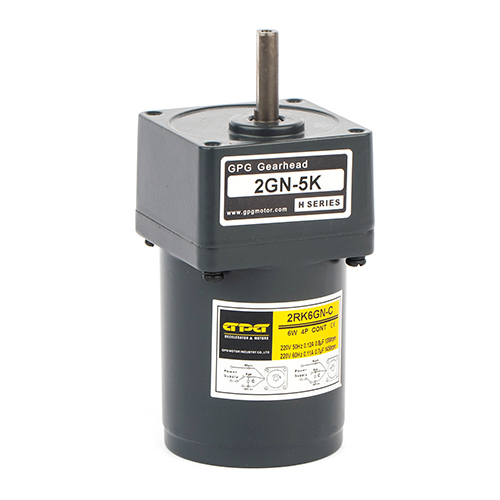
In many practical applications, a single-phase motor is not used as a standalone high-speed motor. Instead, it is paired with a gearhead or gearbox to create a geared motor solution. This arrangement is especially useful when the application needs lower output speed and higher torque.
For example, a compact conveyor, feeder, packaging device, or small automation mechanism may not need a fast-spinning output. It may need slow, stable, and controlled motion instead. By combining the motor with a gear reducer, the system can transform the motor’s output into a more practical form for the machine.
This is one reason single-phase geared motors are common in industrial transmission systems and automation support equipment. They combine the accessibility of single-phase power with the mechanical advantage of speed reduction and torque multiplication.
If you are selecting a single-phase motor for a machine or project, it is important to evaluate more than just voltage. A motor that looks acceptable on paper may not perform well if its starting characteristics, torque output, or structural design do not match the real application.
Several factors should be reviewed carefully:
required output power
starting load condition
duty cycle and operating time
whether variable speed or fixed speed is needed
installation space and mounting method
need for gear reduction
noise, temperature rise, and maintenance expectations
By considering these factors together, buyers can select a motor that offers not only electrical compatibility but also long-term functional reliability in the target application.
For equipment manufacturers and industrial buyers, understanding the meaning of a single-phase motor helps simplify sourcing and system design. It makes it easier to match the motor to the actual work environment, avoid over-specification, and choose a drive solution that aligns with the available power infrastructure.
This is especially important in OEM projects, where the final machine may be sold into many different locations. A product based on single-phase power may be easier for customers to install and operate, which can improve market acceptance. At the same time, choosing the right structure, starting method, and gear configuration can help the equipment perform more consistently in actual use.
That is why a clear understanding of single-phase motors is useful not only from a technical perspective, but also from a product planning and commercial standpoint.
A single-phase motor is an AC motor designed to operate on single-phase electrical power, making it a practical solution for many homes, workshops, commercial spaces, and light industrial environments. It works through magnetic interaction between the stator and rotor, but because single-phase power does not naturally create strong starting torque, the motor usually includes an auxiliary starting mechanism such as a start winding or capacitor. This design allows it to provide dependable mechanical output in a wide range of applications.
From fans and pumps to conveyors and compact machinery, single-phase motors remain highly valuable because they match common power conditions and support practical equipment design. For manufacturers looking for reliable motor and geared motor solutions, product range and application experience matter just as much as basic specifications. Taibang Motor Industry Group has developed extensive capabilities in micro AC geared motors, AC induction and reversible motors, brake motors, gearheads, and related transmission products, supporting customers who need compact, application-oriented drive solutions for packaging, automation, conveyor systems, and other light industrial uses.
A single-phase motor is used in equipment that operates on single-phase AC power, such as fans, pumps, compressors, small conveyors, household appliances, and light commercial or industrial machines.
A single-phase motor needs a starting mechanism because single-phase power does not naturally produce enough rotating magnetic effect to start the motor by itself. Components such as start windings or capacitors help create starting torque.
The main difference is the power supply. A single-phase motor runs on single-phase AC power, while a three-phase motor runs on three-phase AC power. This affects startup behavior, smoothness, and typical application range.
Yes, a single-phase motor can be paired with a gearbox or gearhead to form a geared motor. This reduces output speed and increases torque, making the motor more suitable for conveyors, feeders, and controlled motion equipment.
You should consider power requirement, starting load, duty cycle, installation space, need for gear reduction, and the actual working environment. Choosing the right structure for the application is the key to stable performance and long service life.