Views: 0 Author: Site Editor Publish Time: 2026-04-24 Origin: Site


Single-phase motors are among the most common electric motors used in light industrial equipment, commercial machines, and everyday mechanical systems. Although they are often discussed in comparison with three-phase motors, they continue to play an important role in many applications because of their practicality, accessibility, and cost-effectiveness. For equipment manufacturers, engineers, distributors, and end users, understanding the advantages of single-phase motors is essential when choosing the right motor solution for a specific operating environment.
In simple terms, a single-phase motor is designed to run on a single-phase AC power supply, which is widely available in homes, offices, workshops, small factories, and commercial buildings. Because this type of power source is so common, single-phase motors are often the first choice for equipment that does not require the higher power capacity of a three-phase system. They are widely used in fans, pumps, compressors, conveyors, small machinery, household appliances, and many compact automation devices.
The popularity of single-phase motors does not come from one advantage alone. Instead, it comes from a combination of factors such as easier power access, lower installation complexity, practical operating performance, broad application compatibility, and lower system cost in many situations. While they may not be the ideal solution for every heavy-duty industrial task, they offer a very attractive balance of convenience and functionality for a large range of applications.
In this article, we will take a closer look at what single-phase motors are, why they are widely used, and what advantages they offer in real-world equipment design and operation. We will also discuss the types of applications where they perform best and what buyers should consider when selecting a motor for long-term use.
A single-phase motor is an AC motor that operates using single-phase electrical power. This means it is designed to work with the type of electricity commonly supplied in residential and many small commercial environments. Unlike three-phase motors, which rely on three separate alternating current phases for smoother and more powerful rotation, single-phase motors use a different internal structure to start and maintain motion under a single-phase supply.
Because a single-phase power source does not naturally produce a rotating magnetic field in the same way a three-phase supply does, the motor usually requires a starting mechanism to initiate rotation. Depending on the motor design, this may involve a start winding, capacitor, centrifugal switch, or other auxiliary starting component. Once running, the motor continues to rotate and provide mechanical output for the connected equipment.
Although their operating principle is slightly different from that of three-phase motors, single-phase motors remain highly practical for many types of machinery. Their greatest strength lies not in maximum industrial power, but in convenience, adaptability, and suitability for common power environments.
One of the biggest advantages of single-phase motors is that they can run on widely available electrical supply. In many locations, especially outside large industrial plants, single-phase power is much easier to access than three-phase power. This makes single-phase motors extremely practical for equipment that will be installed in homes, retail spaces, workshops, farms, offices, and light commercial facilities.
This accessibility reduces the need for special power infrastructure. In many cases, a user can install the motor-driven equipment without modifying the electrical system significantly. That makes project planning simpler and can reduce both setup time and installation expense. For small machinery manufacturers and OEM equipment builders, this is a major advantage because it expands the number of environments in which the equipment can be used.
From a market perspective, power availability also increases the commercial flexibility of products that use single-phase motors. Equipment designed around a common single-phase power source can often serve a broader customer base, especially in light industrial and commercial markets.
Another major advantage of single-phase motors is installation convenience. Because they are designed to work with commonly available AC power, integrating them into smaller systems is often more straightforward than setting up three-phase equipment. This is especially valuable in applications where simplicity, speed of deployment, and low setup complexity are important.
For many users, the ability to connect a motorized device to standard power is a practical benefit that directly affects purchasing decisions. This is particularly true for small machines, workshop tools, compact conveyors, fans, pumps, and commercial devices that may be installed in locations without advanced industrial electrical infrastructure.
Single-phase motors can also be an attractive option for replacement projects. If an existing machine is already set up for single-phase supply, replacing the motor with another single-phase model is usually easier than redesigning the entire electrical system around a different power standard.
In many light-duty and medium-duty applications, single-phase motors can offer a cost advantage. This is not only because the motor itself may be economical, but also because the overall system cost is often lower when single-phase supply is already available. Avoiding additional electrical upgrades, phase conversion equipment, or more complex wiring arrangements can make the total project more affordable.
For OEM equipment manufacturers, using single-phase motors in the right applications can help create products that are both practical and competitive. A machine that performs well while remaining easy to power and install can appeal strongly to customers who value convenience and long-term operating economy.
Of course, cost effectiveness should always be evaluated in relation to the application. For extremely demanding industrial loads, a different motor solution may be better. But for many smaller systems, the balance of purchase cost, installation simplicity, and power accessibility makes single-phase motors highly attractive.
Single-phase motors are especially well suited for light-duty and moderate-duty applications where the load does not require the power density of a large three-phase motor. In these situations, they can provide dependable performance while keeping the system design practical and efficient.
Many machines do not need extremely high horsepower or heavy industrial drive capacity. Instead, they require stable operation, compact design, and compatibility with available power. This is exactly where single-phase motors perform well. They are widely used in equipment such as ventilation systems, small pumps, food processing devices, office machinery, compact conveyors, and packaging support equipment.
Their suitability for these operating ranges makes them a common choice in both consumer-adjacent and business-oriented machinery. They bridge the gap between household electrical convenience and practical mechanical performance.
Another important advantage of single-phase motors is their design flexibility. They are available in many frame sizes, output ratings, and structural forms, making them adaptable to a wide variety of product designs. This flexibility is especially valuable when manufacturers need to develop compact machines with limited installation space.
In many applications, the motor is not used alone but combined with a gearbox to form a compact drive solution. This is common in small conveyor systems, packaging mechanisms, material handling devices, and automated equipment. A well-matched single-phase motor and gear reducer can provide slower output speed, higher torque, and more controlled motion in a compact footprint.
Because of this versatility, single-phase motors are not limited to one narrow market. They can be used in commercial machines, light industrial devices, agricultural tools, and customized OEM systems that require practical AC-powered motion.
Single-phase motors are often valued for their reliability in ordinary use environments. When designed properly and used within their intended range, they can provide stable and dependable service over long periods. This is one of the main reasons they remain common in both standard equipment and specialized small machinery.
Reliability does not mean every motor is identical in quality. The material selection, winding design, bearing quality, insulation system, manufacturing accuracy, and quality control process all influence long-term performance. However, at the application level, single-phase motors are widely trusted because they are proven solutions in many repetitive, day-to-day working conditions.
For users operating machines in workshops, stores, distribution areas, and light manufacturing environments, this dependable operating style is often more important than maximum power. A motor that starts properly, runs consistently, and fits the available power system delivers real value over time.
Many machines are designed to work as independent or standalone units rather than as part of a large centralized industrial line. In these cases, single-phase motors have a clear advantage because they can be used in locations where only standard AC power is present. This makes them ideal for self-contained systems that may be installed, moved, or serviced without access to full industrial infrastructure.
Standalone equipment often includes portable machinery, compact conveyor modules, retail equipment, food service machines, medical support devices, and workshop automation tools. These machines benefit from motor solutions that are easy to integrate, easy to power, and easy to deploy across different sites.
For manufacturers serving broad customer markets, this kind of deployment flexibility can be a major commercial advantage. Equipment based on single-phase motors can often be sold into more locations with fewer installation barriers.
Although single-phase motors require a starting mechanism, many designs offer practical and dependable starting performance for their intended loads. Capacitor start motors, capacitor run motors, and related structures are widely used because they help improve starting torque, running efficiency, and operational smoothness in many applications.
This means that single-phase motors are not just simple power devices for basic tasks. They can be engineered to meet a wide range of performance requirements depending on how the motor is designed and what the equipment needs. In some applications, strong starting behavior is important. In others, quieter running or stable continuous operation matters more. Different single-phase motor designs can address these priorities in different ways.
As a result, the category of single-phase motors includes more than one fixed solution. It includes a family of AC motor options that can be adapted for many practical machine requirements.
One often overlooked advantage of single-phase motors is the reduced burden they place on the end user’s electrical infrastructure. In many cases, the user does not need to upgrade building power, add industrial phase conversion equipment, or redesign site wiring extensively to install a single-phase motor-driven machine.
This matters because the real cost of a motorized machine is not only the purchase price. It also includes installation, site preparation, electrical compatibility, maintenance, and long-term service convenience. A machine that can operate from standard single-phase power often reduces these hidden costs.
For distributors and equipment integrators, this makes single-phase motor products easier to recommend to customers who want practical solutions without major electrical modifications. In many industries, the simpler installation path is just as important as the motor’s direct mechanical performance.
Single-phase motors are used across many different industries, and that broad application range is itself an advantage. A technology that can serve multiple markets tends to benefit from mature design methods, established manufacturing processes, and strong long-term demand. This gives buyers more choices in specifications and product configurations.
These motors are often found in:
small conveyors and material transfer units
ventilation and cooling equipment
commercial kitchen and food processing machines
water pumps and fluid systems
packaging support equipment
agricultural and workshop machinery
retail and service equipment
The ability to serve so many kinds of applications shows why single-phase motors remain highly relevant. They are not limited to one niche. They are practical drive solutions across a wide spectrum of real operating environments.
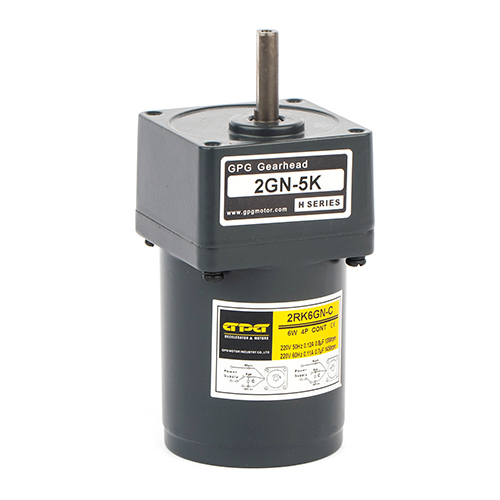
Single-phase motors become even more valuable when paired with gear reduction systems. In many machines, the motor alone runs too fast for the intended application. By combining the motor with a gearhead or gearbox, the output speed can be reduced while torque is increased. This creates a more useful and controlled drive system for conveyors, feeders, packaging units, and compact automation devices.
Single-phase geared motors are especially useful where standard AC power is available but the application requires slower output and stronger load-handling capability. This combination allows engineers to take advantage of both the power accessibility of single-phase supply and the mechanical benefits of gear reduction.
For many OEMs, this makes single-phase motor solutions more attractive because they support not only simple rotation, but also practical motion control in compact equipment.
From a product strategy point of view, one of the most meaningful advantages of single-phase motors is easier market acceptance. Machines that run on common single-phase power are often easier for buyers to approve because they fit existing infrastructure. This lowers hesitation during purchasing and can shorten the decision-making process.
Customers generally prefer equipment that is easy to install, easy to operate, and compatible with the electrical systems they already have. When a machine powered by a single-phase motor meets the required performance level, it often becomes a practical and attractive option. This is especially true in markets where three-phase power is less common or reserved mainly for larger industrial facilities.
That is why many manufacturers continue to build successful equipment platforms around single-phase motor designs. They align well with real customer usage environments.
Even though single-phase motors have many advantages, proper selection still matters. The motor should match the actual load, duty cycle, startup condition, installation space, and environmental requirements of the equipment. Choosing the wrong motor size or wrong structural design can reduce performance even if the power type is appropriate.
Before selecting a single-phase motor, buyers should review several key factors:
required output power and torque
continuous or intermittent duty
startup load condition
need for gear reduction
installation size and mounting method
noise, efficiency, and maintenance expectations
When these factors are evaluated carefully, single-phase motors can deliver excellent value. The goal is not simply to choose a motor that runs, but to choose one that fits the actual working conditions and supports long-term equipment reliability.
The advantages of single-phase motors come from their practicality, accessibility, and wide application value. They are easy to power in common environments, convenient to install, cost-effective in many small and medium systems, and highly suitable for standalone equipment, light industrial machines, and commercial devices. Their compatibility with gear reduction solutions makes them even more useful in applications that require controlled speed and higher torque output.
For businesses developing AC-powered motion systems, choosing the right motor means balancing electrical compatibility, mechanical performance, and long-term usability. A supplier with strong product range and application understanding can make that process much smoother. Taibang Motor Industry Group has long focused on geared motor and motor drive solutions, with product lines covering micro AC geared motors, AC induction and reversible motors, brake motors, gearheads, and other compact transmission solutions. By combining manufacturing experience with practical application support, the company helps customers find motor configurations suited to conveyors, packaging equipment, automation devices, and a wide range of light industrial applications.
The main advantage of single-phase motors is that they can run on widely available single-phase AC power, making them highly practical for homes, workshops, commercial buildings, and light industrial equipment.
Yes, single-phase motors are suitable for many light-duty and moderate-duty industrial applications, especially where standard AC power is available and extremely high power output is not required.
They are popular because they are easy to integrate, easy to power, and often cost-effective for compact equipment such as conveyors, pumps, fans, packaging support machines, and workshop tools.
Yes, single-phase motors are often paired with gearheads or gearboxes to form geared motor solutions. This helps reduce output speed and increase torque for more practical machine operation.
You should consider the required power, torque, duty cycle, startup condition, installation space, and whether gear reduction is needed. Matching the motor to the actual application is the key to good performance and long service life.