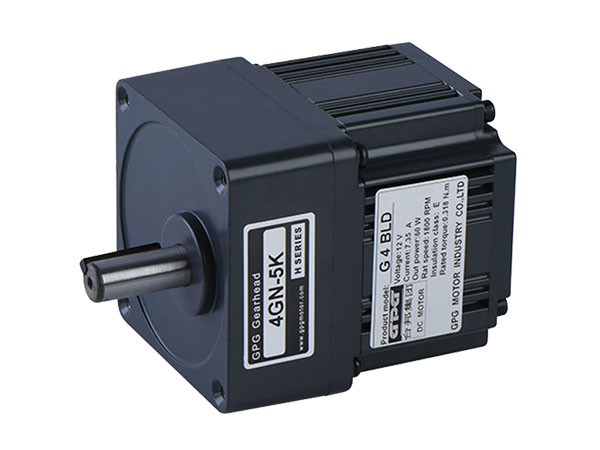
Views: 0 Author: Site Editor Publish Time: 2026-04-22 Origin: Site


When choosing a dc gear motor or an ac gear motor for industrial equipment, automation systems, conveyors, packaging machines, or compact mechanical devices, one question appears again and again: what is the actual difference between them? At first glance, both products seem to do the same job. They both combine a motor with a gearbox, and they both reduce speed while increasing torque to make the output more practical for real applications. But once you look deeper, the differences become very important.
The choice between an AC gear motor and a DC gear motor affects much more than the power source. It influences speed control, torque performance, wiring method, maintenance, application flexibility, cost structure, and overall system design. In some projects, an AC gear motor is the more stable and economical solution for continuous industrial duty. In others, a DC gear motor is preferred because it offers more flexible speed adjustment, compact design, and easier directional control.
For equipment manufacturers, OEM buyers, engineers, and sourcing teams, understanding these differences is essential. Selecting the wrong motor type can lead to unnecessary cost, difficult integration, poor control performance, or lower long-term reliability. Selecting the right one helps improve efficiency, simplify the drive system, and match the motor more closely to the machine’s actual working conditions.
This article explains the difference between AC and DC gear motors in a clear and practical way. We will look at how each one works, how they differ in control and performance, where they are commonly used, and how to decide which one is better for your application.
Before comparing the two motor types, it helps to understand what a gear motor actually is. A gear motor is a complete drive unit made by combining an electric motor with a gearbox. The motor generates rotary motion, while the gearbox reduces speed and increases torque. This allows the output shaft to deliver slower, stronger, and more usable motion for mechanical systems.
Without a gearbox, many motors would spin too fast for practical industrial use. A conveyor, feeder, door operator, packaging mechanism, or small automation unit usually needs controlled output rather than extremely high RPM. The gearbox solves that problem by adjusting the motor’s natural speed characteristics to fit real load requirements.
Both AC gear motors and DC gear motors follow this same general principle. The difference is in the type of electrical power they use and the way they generate and control motion. That difference in electrical design leads to major differences in application behavior.
An AC gear motor is a gear motor powered by alternating current. In this type of system, the motor runs on AC electrical supply, such as single-phase or three-phase power, depending on the design. The motor section may be an induction motor, reversible motor, brake motor, speed control motor, or another AC motor configuration, and it is paired with a gearbox to provide reduced speed and increased torque.
AC gear motors are widely used in industrial environments because AC power is common in factories, workshops, production lines, and fixed installation equipment. They are often selected for stable continuous-duty operation and are known for reliability, straightforward installation in certain environments, and suitability for industrial machinery.
In many cases, an AC gear motor is used where the machine operates for long periods at a relatively fixed speed. It is a practical choice for conveyors, mixers, packaging systems, material handling devices, and many kinds of automated production equipment.
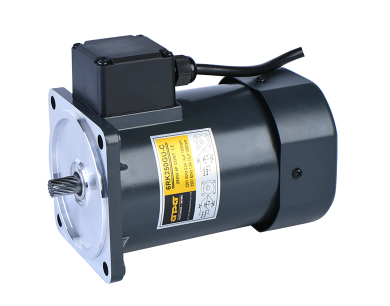
A DC gear motor is a gear motor powered by direct current. The motor section may be a brushed DC motor or a brushless DC motor, and it is combined with a gearbox to reduce speed and multiply torque. Compared with a standard DC motor, a dc gear motor provides more usable mechanical output for applications that need controlled speed, stronger load-handling capability, and compact structure.
DC gear motors are often chosen when flexible speed control, easy reversal, lower-voltage operation, or compact integrated motion is important. They are common in smart devices, small automation systems, actuators, medical devices, mobile equipment, robotic systems, dispensing units, and many custom OEM applications.
Because DC motors are easier to regulate through voltage control or electronic drivers, a DC gear motor is often preferred when variable speed and responsive control are key parts of the design.
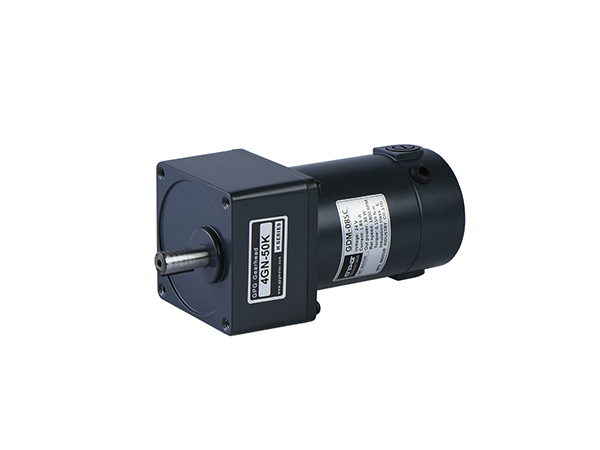
The most direct difference between an AC gear motor and a DC gear motor is the type of electrical power they use. An AC gear motor uses alternating current, while a DC gear motor uses direct current. This may sound like a simple technical distinction, but it shapes nearly every aspect of how the motor is integrated into a machine.
In industrial settings where AC mains power is readily available, AC gear motors are often easier to connect into the power system. In contrast, DC gear motors are commonly used where the system already operates on DC power, such as battery-powered devices, compact control systems, or electronically managed equipment.
This power difference also affects the supporting components required in the system. AC gear motors may need different types of controllers, capacitors, or frequency control arrangements depending on the design. DC gear motors may rely on power supplies, voltage control, or dedicated electronic drivers, especially in brushless systems.
One of the most important differences between an AC gear motor and a DC gear motor is speed control behavior. This is often one of the deciding factors when buyers compare the two.
Traditional AC gear motors are often used in fixed-speed applications. Their speed depends on the motor design and the frequency of the AC power supply. While some AC gear motors can provide speed control, especially when paired with dedicated speed controllers or variable frequency systems, control flexibility is not always as direct or as simple as with DC motors.
For many industrial applications, that is not a disadvantage. A machine that needs steady, continuous, repeatable operation at a defined speed may perform very well with an AC gear motor. In fact, this stable operating style is one reason AC gear motors remain popular in fixed production environments.
A dc gear motor usually offers easier and more flexible speed adjustment. In brushed DC systems, motor speed can often be adjusted by changing the input voltage or using pulse-width modulation control. In brushless DC systems, the driver manages speed electronically with even greater precision and efficiency.
This makes DC gear motors highly attractive for applications where speed needs to change frequently, where fine tuning is important, or where the equipment requires more responsive performance during operation.
Direction control is another major area where AC and DC gear motors differ.
For a DC gear motor, reversing direction is usually relatively simple. In a brushed dc gear motor, reversing polarity can reverse the motor’s direction. In brushless systems, direction is managed through the driver. This makes DC gear motors very convenient for applications that need forward and reverse motion.
With an AC gear motor, reverse operation depends on the motor design and wiring arrangement. Some AC motors are designed as reversible motors and can support directional switching, but the method is different from typical DC reversal. Depending on the application, this may involve different wiring, switching logic, or controller support.
As a result, DC gear motors are often seen as more intuitive for compact systems requiring frequent bidirectional movement, while AC gear motors are often preferred for stable single-direction or structured industrial control environments.
Both AC and DC gear motors use a gearbox to reduce speed and increase torque, so both can provide strong output for mechanical loads. However, their torque behavior and controllability may differ depending on the motor structure and control method.
A DC gear motor is often valued for its responsive startup behavior and flexible torque control in low-speed applications. Because DC motors can be controlled more directly, they are well suited for systems where startup response and variable-speed load matching are important.
An AC gear motor, on the other hand, is often appreciated for stable operation in continuous-duty environments. In many fixed industrial applications, the motor provides dependable performance over long operating periods with consistent output behavior.
The better option depends less on theory and more on the application itself. If the machine needs highly adjustable motion, a dc gear motor may offer better flexibility. If it needs steady operation in a permanent industrial power environment, an ac gear motor may be the more practical choice.
Another important distinction lies in the available motor and gearbox combinations. Both AC and DC gear motors can be designed in many structural forms, but the product families often develop around different application needs.
AC gear motor product lines commonly include:
AC induction geared motors
reversible geared motors
electromagnetic brake gear motors
right angle gear motors
worm gear motors
These are often selected for factory equipment, conveyors, processing machinery, and other fixed-location systems.
DC gear motor lines often include:
parallel shaft DC brushed gear motors
worm DC gear motors
right angle DC gear motors
flat-type DC gear motors
brushless DC gear motors
planetary DC drive solutions
These structures are commonly used in compact equipment, mobile systems, precise motion assemblies, and OEM-driven custom applications.
Maintenance requirements can vary significantly depending on whether the motor is AC or DC, and more specifically on whether the DC motor is brushed or brushless.
Many AC gear motors are valued for their robust and stable long-term operation, especially in industrial settings where the machine runs continuously for extended periods. Their maintenance profile is often seen as practical and predictable when the motor is correctly selected and used within its rating.
For DC gear motors, maintenance depends greatly on motor type. A brushed dc gear motor contains brushes and a commutator, which will wear over time and may eventually require replacement or servicing. A brushless DC gear motor avoids brush wear and can offer longer service life and lower maintenance, but it also depends on an electronic driver system.
This means the maintenance comparison is not simply AC versus DC. It is often better understood as AC versus brushed DC versus brushless DC, especially in applications where service interval and lifecycle cost are critical.
Efficiency is another area where the comparison depends on motor type and working conditions. In many applications, brushless DC gear motors are chosen because they can offer excellent efficiency, precise control, and stable electronic management. Brushed DC gear motors are often selected for their simplicity and cost effectiveness, though they may not match brushless designs in efficiency or service life.
AC gear motors can also be highly efficient and dependable, particularly in well-matched industrial systems that run under stable conditions. Their advantage often lies in durability, simplicity within AC-powered installations, and suitability for continuous operation rather than in maximum control flexibility.
So if the application places great importance on controllability, dynamic speed adjustment, and smart drive behavior, a dc gear motor may have the advantage. If the focus is rugged continuous operation in an AC-powered industrial environment, the ac gear motor may be the stronger option.
The application field is one of the clearest ways to understand the difference between AC and DC gear motors. Although there is some overlap, each motor type tends to be favored in certain environments.
AC gear motors are often used in:
conveyor systems
packaging equipment
food processing machines
material handling systems
industrial production lines
fixed-location automation equipment
These applications benefit from stable power supply, continuous-duty capability, and dependable long-term industrial performance.
DC gear motors are commonly used in:
medical devices
smart home systems
robotics and mobile equipment
dispensing and vending systems
small automation units
battery-powered or electronically controlled devices
These applications benefit from compact design, flexible speed control, easy reversal, and convenient low-voltage integration.
The best choice depends on the actual demands of the equipment. There is no universal answer, because a motor that is ideal for one system may be unsuitable for another. The most reliable selection process is to begin with the application rather than the motor category.
When comparing an ac gear motor and a dc gear motor, several questions should be considered. What power source is available in the final machine? Does the equipment need variable speed or mostly fixed speed? Is forward and reverse operation frequent? Is the machine stationary or mobile? Does the design prioritize low maintenance, easy control, compact size, or industrial-duty stability?
A practical comparison can be summarized like this:
choose an ac gear motor when the equipment uses AC power, needs stable continuous operation, and fits a fixed industrial installation
choose a dc gear motor when the system needs flexible speed control, easy directional adjustment, compact drive design, or lower-voltage operation
Of course, gearbox type, output torque, shaft configuration, mounting style, duty cycle, and working environment must also be reviewed before the final choice is made.
Many buyers want a simple answer to this question, but in reality, neither motor type is always better. An AC gear motor is not automatically superior to a DC gear motor, and a DC gear motor is not automatically more advanced just because it offers more control flexibility. The better motor is the one that matches the application most effectively.
If a machine runs on a production line all day, uses AC mains power, and requires stable torque at a consistent operating speed, an AC gear motor may be the better choice. If another machine requires compact structure, adjustable speed, responsive control, and easy forward and reverse motion, then a DC gear motor may be more suitable.
The key is not to compare them in isolation, but to compare them in the context of the system they will drive.
The difference between AC and DC gear motors begins with power supply, but it extends much further into control behavior, speed adjustment, directional flexibility, maintenance requirements, and application suitability. An ac gear motor is often preferred for stable industrial operation under AC power, while a dc gear motor is often selected for compact systems that need flexible speed control and simpler directional management. Both can deliver strong torque and practical output when matched with the right gearbox and used in the right environment.
For buyers and equipment manufacturers, the most effective approach is to evaluate the actual demands of the machine rather than choosing only by habit or price. Working with a supplier that understands both motor types can make the selection process much more efficient. Taibang Motor Industry Group has developed a broad range of motion solutions covering micro AC geared motors, small AC gear motors, DC brushed gear motors, DC brushless gear motors, gearheads, planetary gearheads, and roller drum motors. With long-term manufacturing experience, strong technical development capability, and product structures suited to different industries, the company helps customers match the right drive solution to applications in automation, logistics, packaging, and industrial transmission systems.
The main difference is the power source. An AC gear motor uses alternating current, while a DC gear motor uses direct current. This difference affects speed control, directional control, wiring, and application suitability.
In many applications, yes. A dc gear motor usually offers easier speed adjustment and more convenient direction control, especially in brushed systems or electronically managed brushless systems.
It depends on the conveyor design. Many fixed industrial conveyors use an ac gear motor because of stable operation and easy integration into factory power systems. However, some compact or electronically controlled conveyors may use a dc gear motor when more flexible control is needed.
That depends on the type. Brushed DC gear motors may require more maintenance over time because of brush wear. Brushless DC gear motors usually require less maintenance but depend on an electronic driver. AC gear motors are often valued for stable long-term industrial operation.
You should compare the available power source, required speed control, direction needs, installation environment, duty cycle, load condition, and control system design. The best motor is the one that matches the real application rather than just the general category.